
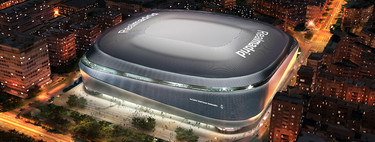
The Bernabéu Transforms into Tennis Courts: A Strategic Move
The iconic Santiago Bernabéu stadium is set to undergo a remarkable transformation, converting its retractable grass into clay courts in preparation for training during the Mutua Madrid Open 2026. This exciting development is made possible by the extensive engineering involved in the stadium’s recent renovation, which has exceeded an investment of €1.3 billion. Furthermore, it strategically fills the scheduling gaps in Real Madrid’s calendar, demonstrating the club’s ambition to diversify its offerings amid ongoing challenges, particularly around noise restrictions and community concerns.
What’s On the Agenda?
From April 23 to 30, 2026, the Bernabéu will become a hub for tennis as elite players like Carlos Alcaraz, Jannik Sinner, Aryna Sabalenka, and Iga Swiatek train on-site prior to the Mutua Madrid Open, set to kick off on April 20. Located just a minute’s drive from the players’ hotel, the move signifies a monumental shift for the venue, which has long been associated primarily with football. This transition into tennis is not merely a suggestion; it’s a well-thought-out decision championed by Real Madrid president Florentino Pérez, who has mulled over this pivot for years.
Innovative Engineering Behind the Conversion
The transformation of the Bernabéu’s surface relies on the state-of-the-art retractable pitch system that was installed during the stadium’s major renovations recently completed in late 2023. The field consists of six trays, each measuring 107 by 11.67 meters and weighing around 1,500 tons. This system employs 24 transport carts to shift the trays into a specially designed underground storage facility known as the hypogeum, where growth lamps and climate control technology ensure optimal conditions for maintaining the grass when not in use.
Financial Necessity: A Multi-Functional Approach
While fans may view this shift as an exciting development, it stems from a pressing need for financial viability. The renovation of the Bernabéu, which cost around €1.1 billion after several loans, means that Real Madrid cannot rely solely on football revenue. With around 20 home games per season, the stadium sits idle for more than 300 days each year. To address this, the club is adopting a strategy similar to that of venues like SoFi Stadium in Los Angeles and Tottenham Hotspur Stadium in London, diversifying its events to sustain financial growth. For the 2023-2024 fiscal year, Real Madrid’s revenue surpassed €1.2 billion, bolstered significantly by this diversification initiative.
A Long-Standing Love for Tennis
Florentino Pérez has long envisioned linking the Bernabéu with tennis, dating back to a 2019 general assembly where he discussed organizing an exhibition match between tennis legends Rafael Nadal and Roger Federer. Although that dream never materialized, the relationship with tennis remains strong. Nadal has expressed interest in one day presiding over Real Madrid, while current world number one Carlos Alcaraz is a devoted fan. The Bernabéu’s association with tennis signifies a pivotal step in fulfilling Pérez’s vision, albeit in a different form.
Challenges and Community Concerns
The aspiration to turn the Bernabéu into a multi-event venue has faced considerable setbacks, particularly concerning concerts. Since its inauguration as a music venue in April 2024, noise complaints from local residents have skyrocketed, leading to fines reaching €2.6 million. Consequently, the stadium suspended additional concerts scheduled into early 2025, as community concerns have made it increasingly difficult to host large events. However, tennis training poses a more manageable acoustic footprint, allowing the club to demonstrate its commitment to diversification without inciting further complaints from the neighborhood.