
Pakistan’s Mediation in the Ongoing Conflict
On March 26, 2026, Pakistani Foreign Minister Ishaq Dar confirmed that Pakistan is mediating indirect talks between the United States and Iran. The U.S. has proposed a 15-point plan aimed at resolving the escalating conflict in the region. Dar emphasized that the messages between the two powers are being communicated through Pakistani channels, supported by allies like Turkey and Egypt. He stated, “Pakistan remains fully committed to promoting peace and continues to make efforts to ensure stability in the region.”
Escalation of Military Actions
Recent events illustrate the heightened tensions. The Iranian regime launched attacks targeting Israel and Gulf nations, with notable incidents in Kfar Qasim, Israel, where Iranian projectiles caused injuries. In retaliation, the Israel Defense Forces (IDF) executed significant strikes against Iranian infrastructure throughout various regions, marking a new phase in the military confrontation.
Iran’s Position on U.S. Proposals
While the talks brokered by Pakistan are ongoing, Iranian military sources, as reported by the Wall Street Journal, have warned the U.S. of their military capabilities, indicating a readiness to create credible threats to the Bab al Mandeb Strait. This is particularly relevant should the U.S. opt for ground responses to the blockade of the Strait of Hormuz, a key maritime route.
Trump’s Stance on NATO Inaction
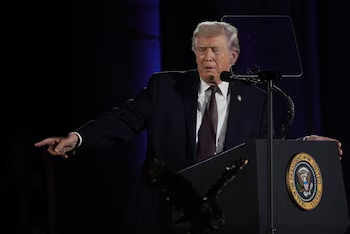
In a recent outburst, U.S. President Donald Trump criticized NATO for its lack of action regarding Iran, stating he will “never forget” their inaction during these critical times. His rhetoric highlighted a growing divide in international military alliances and accountability, branding the Iranian state as “militarily destroyed” while expressing no need for NATO’s assistance.
Israeli Military Operations
The conflict has seen increased military operations, including the elimination of Iranian commander Alireza Tangsiri, who was reportedly responsible for the strategic closure of the Strait of Hormuz. Israeli Defense Minister Israel Katz confirmed this operation during a military meeting, underscoring Israel’s aggressive military strategy in the region.
Revolutionary Guard’s Ascendancy
As the conflict persists, the Islamic Revolutionary Guard is consolidating its control over Iran. This shift raises concerns about who is capable of negotiating with the U.S. amidst ongoing hostilities. The effectiveness of the Revolutionary Guard in governing both state and military affairs poses critical questions about the future of peace discussions.
Impacts on Global Airlines
In light of the ongoing conflict, Asian airlines have begun increasing their routes to Europe, positioning themselves as alternatives in the face of Middle Eastern instability. Major players like Cathay Pacific have suspended flights to conflict-prone areas while strengthening connections to Europe.
Conclusion
As Pakistan facilitates diplomatic engagement, the war continues to evolve, impacting military strategies and international relations. The unfolding story will influence not only the geopolitical landscape but also the civil and economic stability of those affected by the ongoing conflict. The interplay between military action and diplomatic mediation remains crucial in seeking lasting peace in the region.