
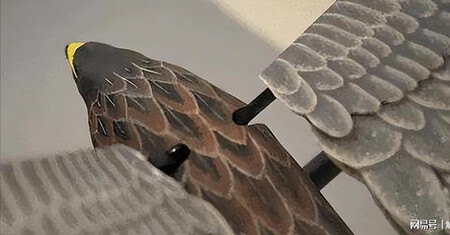
Exploration of Nature-Inspired Drones in China
When most people envision drones, they picture the familiar multi-rotor designs that have become ubiquitous in various industries—from aerial photography to agricultural monitoring. However, a remarkable shift is occurring in the field of aerial technology, particularly in China, where researchers are drawing inspiration from nature to develop new types of drones. This innovation aims to replicate the elegant flight patterns of the natural world rather than relying solely on mechanical propellers.
Drones with Wings: Nature’s Influence
According to 163.com, a team from the Beijing University of Science and Technology has pioneered several flapping-wing drones modeled after various animals, including eagles, pigeons, butterflies, and beetles. Among these, an eagle-inspired model has garnered significant attention for achieving an impressive 256 minutes of continuous flight—a record in this specific category. This model outperformed a previous record set in 2023 by a bionic airplane developed by Northwest Polytechnic University, which managed to fly for 185 minutes and 30 seconds.
Technical Innovations: A New Flight Approach
The appeal of these prototypes lies not only in their biological aesthetic but also in the underlying technical principles. As noted by Global Times, these bionic unmanned aerial vehicles (UAVs) imitate the natural flapping motion of birds and insects. Notably, the eagle-inspired model incorporates a sophisticated visual system that can recognize, locate, and track vehicles, individuals, structures, or even license plates, as explained by researcher Wu Xiaoyang.
Current Knowledge and Future Challenges
While proponents promote these drones as having advanced bionic systems, it’s important to differentiate between confirmed capabilities and assumptions. Chinese state media emphasize progress in both flight duration and detection technologies, yet lack details on operational applications or practical scenarios. As researchers note, challenges related to flight autonomy and system intelligence remain to be addressed before deploying these innovations on a larger scale.
Addressing Obstacles Ahead
Experts, including Wang Zhijie from the Beijing Institute of Technology, acknowledge that significant hurdles lie ahead. Key to this progress is developing batteries with higher energy density to sustain longer flight times. Additionally, innovations in high-precision, compact beating mechanisms and materials that can adapt to varying aerodynamic conditions are crucial for mimicking the efficiency of bird wings.

The Future is Biological Flight
As research continues, the potential uses for these nature-inspired drones grow. Applications in environmental monitoring, rescue missions, and other specialized tasks are on the horizon, though specifics remain somewhat unclear. The focus for now is on enhancing the autonomy and efficiency of these UAVs. If progress is made, we may witness a paradigm shift in drone technology—one that closely mirrors the biological mechanics of flight rather than the traditional motor-driven designs.
In conclusion, the exploration into bionic drones represents a fascinating interplay between nature and technology, paving the way for a new era in aerial innovation.
Images | CCTV