
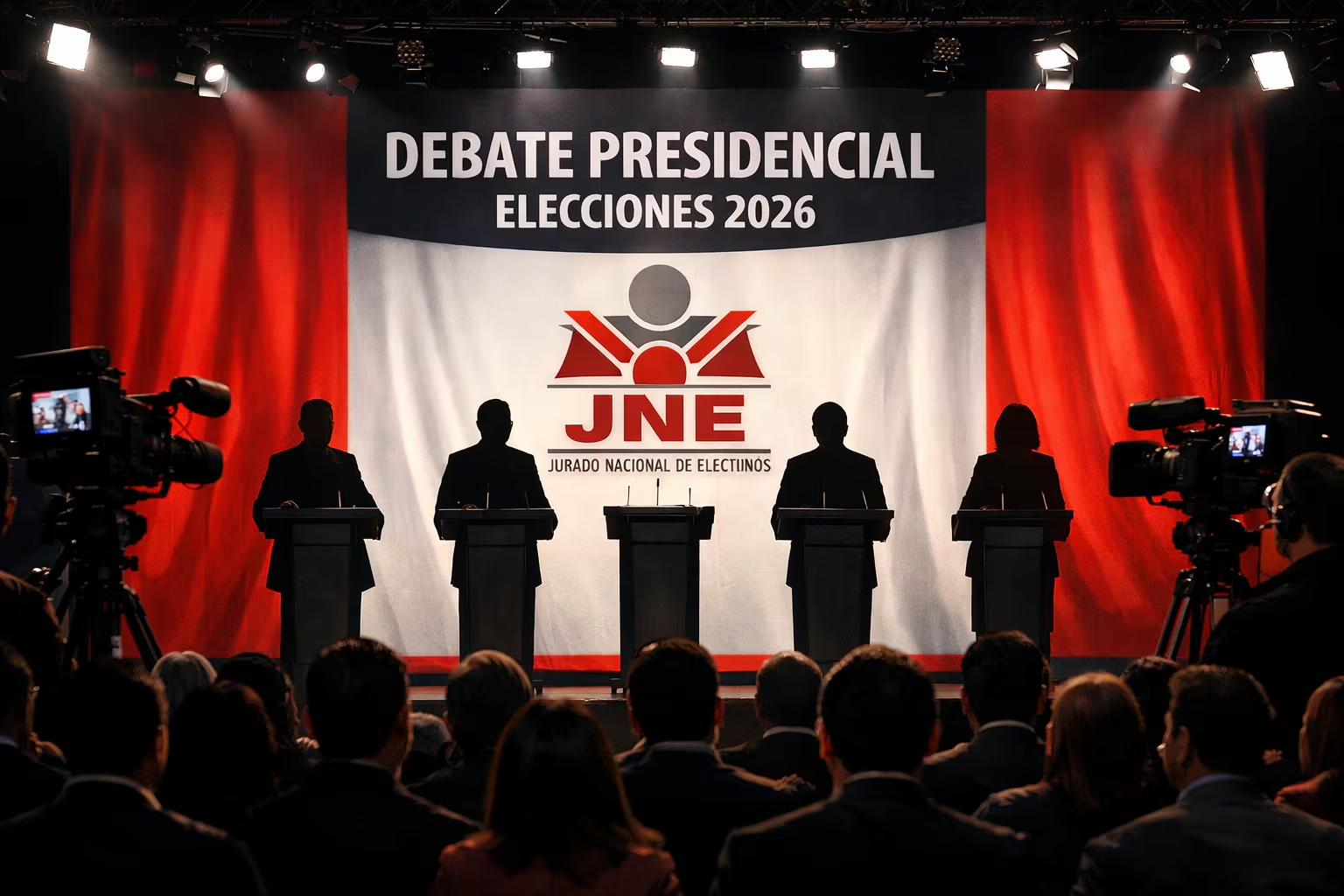
The Second Presidential Debate: Key Moments and Candidates
On March 24, 2026, the second presidential debate took place at the Lima Convention Center, showcasing 11 candidates. Organized by the National Elections Jury (JNE), the evening concentrated on pressing issues such as citizen security, crime, and corruption.
Participants and Absences
The lineup for this debate included representatives from significant political parties:
- Faith in Peru: Alvaro Paz de la Barra
- Strength and Freedom Alliance: Fiorella Molinelli
- Federal Democratic Party: Armando Massé
- PRIN: Walter Chirinos
- Civic Works Party: Ricardo Belmont
- Peru United Democratic Party: Charlie Carrasco
- Peru Action: Francisco Diez Canseco
- Yes I Believe: Carlos Espá
- We are Peru: George Forsyth
- Modern Peru: Carlos Jaico
- Together for Peru: Roberto Sanchez
Notably absent was the candidate from Perú Libre, Vladimir Cerrón, who is currently a fugitive from justice.
Highlights from Candidates’ Final Messages
Fiorella Molinelli and Ricardo Belmont’s Closing Remarks
In her closing statement, Fiorella Molinelli emphasized her commitment to representing vulnerable women and vowed to combat what she termed “the mafia pact” in the upcoming elections. She urged the public to support her candidacy for the General Elections 2026.
Conversely, Ricardo Belmont concluded by calling for national unity, urging Peruvians to come together to address the nation’s challenges.
Rising Tensions Between Candidates
Exchange of Accusations
The debate reached a heated moment when Molinelli and Roberto Sánchez exchanged allegations regarding their records in the health sector. Sánchez accused Molinelli of corruption during her management role at EsSalud amid the pandemic, to which Molinelli staunchly defended her actions, asserting that she saved lives.
Proposals to Combat Corruption
Roberto Sánchez’s Call for a New Constitution
Roberto Sánchez made waves with his assertion that deep-rooted corruption is draining 40% of Peru’s national wealth annually. He advocated for a new constitution, claiming that many systemic issues, including a weak justice system and the commodification of essential services, required reformation.
Anti-Corruption Strategies from Candidates
In a series of proposals from various candidates, innovative ideas emerged:
- Alvaro Paz de la Barra suggested a State Council and a digitalization plan targeting corruption.
- Carlos Jaico stressed the need for whistleblower protections, addressing the reticence of individuals to report corrupt activities.
- Walter Chirinos highlighted bureaucratic corruption and proposed strict control measures to minimize abuses of power.
Noteworthy Criticisms Directed at Cerrón
Molinelli did not shy away from criticizing Vladimir Cerrón, pointing to his fugitive status and condemning his influence within the electoral process. Her remarks were aimed at rallying support against corruption in government, emphasizing the importance of integrity in politics.
Efforts to Streamline Government Functions
Francisco Diez-Canseco proposed reducing the number of ministries from 19 to 10 to curtail governmental spending and improve the efficacy of state projects.
Conclusion
The second presidential debate was marked by intense discussions and passionate proposals focusing on corruption and citizen welfare. As the candidates continue to vie for public support ahead of the General Elections 2026, the issues raised remain core concerns for the future governance of Peru.
Stay tuned for more insights and analysis as the election approaches!