
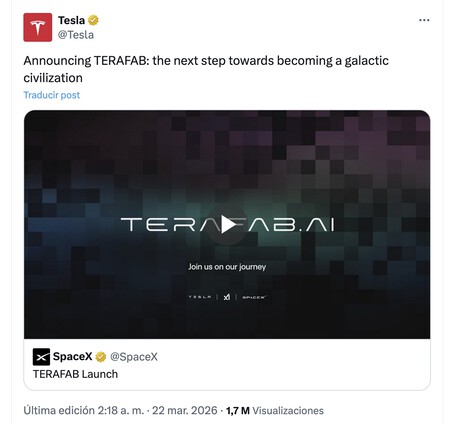
Elon Musk’s Vision: The Terafab Project
Elon Musk has a history of disrupting industries, from revolutionizing the automotive world with Tesla to reshaping aerospace with SpaceX. Although many have questioned his ambitious goals—such as self-driving cars—Musk has repeatedly demonstrated a remarkable ability to turn seemingly impossible ideas into reality. This background makes his latest endeavor, Terafab, worth considering, despite its audacious promise.
What is Terafab?
Launched from an unused power plant, Musk has unveiled Terafab, a groundbreaking chip factory aimed at producing vast amounts of computing capacity. Collaborating with Tesla, SpaceX, and xAI, the plant aims to generate between 100 and 200 gigawatts (GW) annually on Earth and achieve a staggering 1 terawatt (TW) in space. Yet, as with many Musk announcements, the line between genuine engineering and spectacle remains blurred.
The Need for Chips
During the unveiling, Musk emphasized a critical issue: existing semiconductor manufacturers like TSMC aren’t meeting the chip demand needed for advancements in AI and robotics. To address this inadequacy, he announced plans for Terafab to manufacture chips directly. The demand stems not only from Tesla’s robotaxis and the Optimus humanoid robot but also from SpaceX’s satellite operations. This new venture requires an enormous supply of chips.
Chips Designed for Space and Beyond
Terafab intends to produce two primary types of chips:
Autonomous Vehicle Chips: These will support Tesla’s ongoing goals in self-driving technology and robotics.
D3 Chips for Space: These chips will be specially designed for low Earth orbit missions, where they can utilize solar energy to maximize efficiency.
Musk’s vision suggests that the cost of launching payloads to space could eventually become so low that hosting data centers in orbit may prove cheaper than on Earth.
Challenges Ahead
Despite the promise behind Terafab, significant questions loom. Building a state-of-the-art semiconductor factory is an enormous technological challenge. Currently, the most advanced chip manufacturing technology is controlled by a handful of companies, including TSMC, Samsung, and Intel. The photolithography machinery essential for chip production comes solely from ASML, a Dutch supplier.
Here are some concerns regarding the feasibility of Terafab:
- Lack of partnerships: Musk hasn’t announced any agreement with ASML.
- No outlined orders: There’s no indication that he has secured the necessary equipment.
- Absence of a technological partner: The project seems to lack collaboration with established semiconductor manufacturers.
- Undefined timelines: Musk has not provided any estimated dates for project completion.
- No clear budget: The financial considerations remain undisclosed.
These uncertainties cast a long shadow over the project’s reality.
Aiming for Vertical Integration
One of Musk’s ambitions with Terafab is to control the entire spectrum of chip production—from design and manufacturing to packaging and testing—all under one roof. Achieving this level of vertical integration would challenge conventional practices in the semiconductor industry, which typically relies on hyperspecialized suppliers for various stages.
Balancing Promises with Reality
Despite the challenges, Musk’s track record suggests that he may still pull off what seems impossible. However, he has faced setbacks with prior ventures; self-driving car updates have been delayed, the Cybertruck’s launch has been problematic, and other projects have failed to meet the initial hype.
As Terafab takes shape, it remains to be seen whether Musk can achieve yet another groundbreaking feat or if this project will join the list of ambitions unmet.
Conclusion
While Terafab may seem like another lofty goal on Elon Musk’s seemingly endless list, history shows that dismissing his projects can be a miscalculation. With both excitement and skepticism surrounding Terafab, only time will reveal whether Musk can turn this vision into reality—or if it will fade into the background like other unfinished endeavors.