
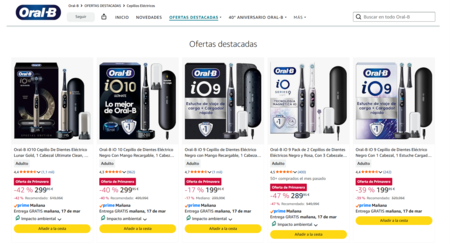
The other day, while I was brushing my teeth, my electric brush made a strange noise. I didn’t give it much importance, but a few days later it happened again, this time accompanied by a clear drop in power. Finally, just as I expected, it stopped working.
I bought it in 2020 for 17.99 euros, so I am more than satisfied with the service it provided. Plus, it happened to be just after Amazon’s spring sales ended, so I rushed to look for a replacement. What I found left me quite surprised.
A Huge (and Very Expensive) Offer
It’s been six years since I bought my ill-fated Oral-B Vitality brush. In that time, I hadn’t kept up with the electric toothbrush market, but went directly to the Oral-B offers because I was happy with my previous brush and still had several heads to use.
Back in 2020, I was aware of pricier models, but this time, hoping for an upgrade, I was stunned by the prices I encountered.
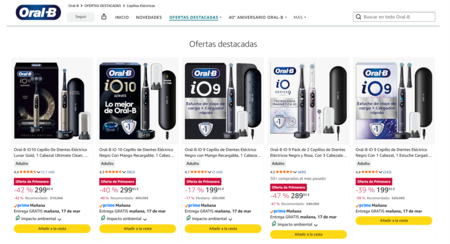
The Oral-B Spring Sale Cover
The most notable offer was the Oral-B iO 10, originally priced at 299 euros (now 309 euros). Other models ranged from 289 to 199 euros, and some even reach 129 euros. At what point did electric toothbrushes become luxury items?
These high-end brushes boast features like color screens, magnetic bases, travel cases with charging capabilities, seven cleaning modes, and—of course—AI. While many of these features might appeal to a certain audience, I find it hard to justify spending that much on a toothbrush.
Along with the soaring prices, the multitude of models made it challenging to discern their differences, prompting me to read comparisons and technical specifications—overwhelming for something that’s essentially a toothbrush.
The Premiumization of the Everyday
This phenomenon affects all types of products and services. We see it with gourmet bakeries, specialty coffee shops, and even kebabs, all of which have elevated their status to justify much higher prices.
With electric toothbrushes, this premiumization is coupled with a techie appeal. While we’ve long normalized the once outrageous price tags of mobile phones exceeding 1,000 euros, I never expected to see toothbrushes priced similarly. The introduction of countless features and premium materials allows brands to justify hefty price tags for what is fundamentally the simple act of brushing our teeth.
The Chosen One
Faced with these prices and knowing I wasn’t willing to spend more than 50 euros, my options became limited. The Oral-B iO 2, costing 50 euros, caught my attention with its travel case, head storage stand, and pressure sensor.
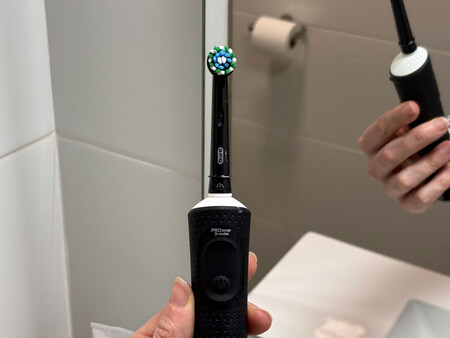
Ultimately, I chose the Oral-B Vitality Pro, which resembles the older model I bought in 2020 but with a few enhancements and a sleek black design. I paid just 22 euros and hope it lasts another six years.
Images | Xataka, Amazon