
The Global Power Shift: Understanding US-China Dependence
The world continues to evolve into a complex arena of geopolitical tensions, notably marked by the strained interactions among major powers such as the United States, Israel, and Iran. While the U.S. has historically been the supreme global power in terms of both military and economic capabilities, China is ambitiously working to alter this status quo.
The Paradoxical Relationship
The connection between the United States and China is characterized by a paradox: they are both fierce rivals on geopolitical grounds yet economically intertwined. The U.S. is increasingly aware of its dependence on Chinese suppliers, especially in military contexts. An internal Department of Defense report reveals the necessity of Chinese components in enhancing U.S. military strength.
Current Military Tensions
Today, we find ourselves in what could be the most intense period of military tension between the U.S. and China since the Cold War. Terms like “pacing challenge” and “pacing threat” reflect the urgency with which U.S. defense documents are now addressing China’s rapid advancements. Despite these tensions, the U.S. remains reliant on China for critical components in its military supply chain.
The Costs of Disruption
China’s ability to potentially disrupt this supply chain could significantly undermine U.S. military operational capabilities. As the U.S. grappled with its military supply lines post-Cold War, it outsourced many production needs to Asia—China, in particular—making the nation a linchpin in defense logistics.
China: The World’s Manufacturing Hub
China stands as the dominant manufacturer of semiconductors and other critical electronics, fulfilling demand from a multitude of sectors, including military applications. Despite ongoing efforts by the U.S. to repatriate semiconductor production, immediate results remain elusive. The implementation of laws like the “Chips Act” aims to pivot U.S. manufacturing back home, but consequences won’t manifest until the medium to long term.
Data-Driven Insights into Dependence
Recent reports underline the staggering extent of U.S. dependence on Chinese suppliers:
- 41% of semiconductors used in U.S. weapons systems are sourced from China.
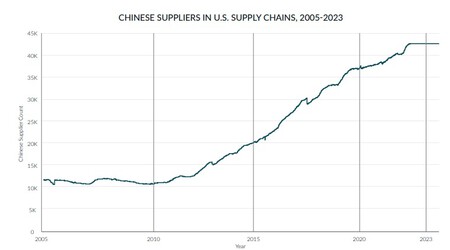
- The number of Chinese suppliers in the defense supply chain has quadrupled between 2005 and 2020.
- U.S. reliance on China for electronics surged 600% from 2014 to 2022.
China’s Dominance in Rare Earths
China has also established itself as a powerhouse in the raw materials sector, especially concerning rare earth elements, which are vital for the production of advanced technology. This does not merely signify ownership of resources; China’s strength emanates from its control over critical refining processes, making it the go-to provider for many nations.
An Instrument of Pressure
The strategic advantages China gains through its dominant supply chains give it leverage against other nations. High investments and minimal profit margins in the refining industry dissuade private enterprises, reinforcing the necessity for state-backed dominance in this crucial sector.
Conclusion
The complex dynamics of U.S.-China relations reveal a critical interdependence that complicates political and military strategies. As both powers continue to navigate this high-stakes landscape, the implications are far-reaching, influencing global economics, defense strategies, and diplomatic relations.