
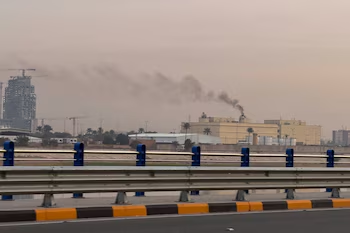
Attack on the US Embassy in Baghdad: A Sign of Escalating Tensions
Overview of the Attack
In the early hours of Tuesday, the US embassy in Baghdad came under attack from drones and rockets. Security officials reported this assault as a new escalation in the ongoing violence gripping the Iraqi capital amidst broader Middle Eastern conflicts. This follows a pattern of increasing hostility directed at American diplomatic missions in the region.
Recent Incidents Leading Up to the Attack
These attacks are part of a series of escalating threats. Hours before the drone and missile strikes, air defenses successfully thwarted a rocket attack aimed at the embassy. Additionally, a drone incident caused a fire at the Al-Rasheed luxury hotel, a common lodging for foreign diplomats within Baghdad’s heavily fortified Green Zone.
Initially, the Iraqi Interior Ministry described the drone incident as a “projectile” landing on the hotel’s roof but later confirmed it was, in fact, a drone attack. Fortunately, authorities reported that these incidents did not result in any casualties or material damage.
Security Measures and Government Response
Due to the heightened threat level, extensive security measures were implemented, including blocking streets leading to the hotel and the US embassy. Fire trucks and ambulances were deployed to the scene as a precaution. A security official informed AFP that air defenses successfully intercepted four rockets intended for the embassy.
The Baghdad Green Zone is recognized as the most secure area in Iraq, housing the US embassy, various foreign diplomatic missions, and key government institutions. However, these incidents highlight the vulnerability even in such protected locales.
Broader Context of the Violence
Iraq has long been a battleground of tensions between the United States and Iran, with groups backed by Tehran frequently targeting American interests. This ongoing strife raises significant concerns about the stability of the region and the safety of foreign diplomatic personnel.
Amid this escalating violence, Iraqi Prime Minister Mohammed Shia al-Sudani, who also serves as the commander-in-chief of the armed forces, called out the attacks as a threat to national security. He pledged that security forces would “pursue the perpetrators” and hold them accountable, emphasizing that such acts undermine Iraq’s progress toward reconstruction and prosperity.
Advisory for American Citizens
In response to these escalating threats, the US embassy issued urgent advisories to American citizens, stressing the need to leave Iraq immediately due to continuous attacks from Iran-aligned militias. This warning follows previous advisories since March 11, which were issued after a missile incident at a heliport associated with the embassy.
Statements from US Leadership
Simultaneously, US President Donald Trump addressed ongoing military operations against Iran, asserting that the conflict would conclude “soon,” though he clarified it wouldn’t be resolved within the week. He also mentioned that the recently initiated operation, dubbed “Epic Fury,” has effectively dismantled key components of the Iranian military infrastructure.
Conclusion
The attack on the US embassy in Iraq is a stark reminder of the precarious situation in the region and the necessity for heightened security and diplomatic reassessments. As tensions continue to rise, both Iraqi and American authorities face the urgent challenge of ensuring safety and managing the enduring complexities of Middle Eastern geopolitics.