
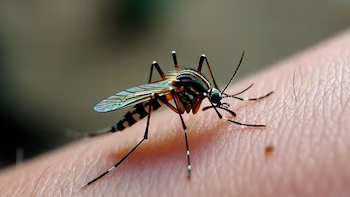
Indigenous Cases of Chikungunya Reported in Santiago del Estero
Overview of the Situation
Santiago del Estero health authorities have announced three indigenous cases of chikungunya in the provincial capital. The Provincial Ministry of Health confirmed these cases following analyses conducted by the Center for Studies of High Complexity and Molecular Medicine (CEAMM). Notably, the affected individuals have no travel history, which raises concerns about the local transmission and expansion of the chikungunya virus.
Regional Context
The emergence of chikungunya in Santiago del Estero is particularly concerning given the ongoing virus circulation within neighboring areas. Over 120 confirmed cases have been recorded in the province of Salta, alongside cases in bordering provinces such as Jujuy and Tucumán, as well as countries like Bolivia, Paraguay, and Brazil. This increasing regional presence of chikungunya heightens the urgency for epidemiological investigations aimed at tracing the origin of these local transmissions.
Current Epidemiological Landscape
Interestingly, the Ministry of Health reported that there is currently no circulation of dengue in Santiago del Estero, which contrasts sharply with the health situation in other northern regions of Argentina where both chikungunya and dengue pose significant public health concerns. Given this backdrop, local health teams have activated surveillance and focus control protocols to mitigate the outbreak’s impact.
Preventive Measures and Community Involvement
Health authorities are employing various strategies, such as door-to-door visits to identify symptomatic individuals and eliminate potential mosquito breeding sites. An emphasis is being placed on community collaboration to prevent new cases and protect public health. Fumigation efforts are part of the comprehensive strategy to reduce mosquito populations, particularly those of the Aedes aegypti mosquito, which transmits both chikungunya and dengue.
Symptoms and Recommendations
Chikungunya primarily presents with high fever and severe joint pain, alongside other symptoms such as muscle pain, headaches, nausea, and fatigue. Unlike dengue, chikungunya rarely results in hemorrhagic complications but can lead to dehydration and worsen chronic conditions, especially in vulnerable populations like the elderly and young children.
Hence, health officials strongly recommend immediate medical consultation for anyone exhibiting signs of fever above 38°C in conjunction with intense body or joint pain. It is vital that individuals refrain from self-medicating and seek professional healthcare when experiencing potentially related symptoms.
Effective Mosquito Control
To effectively combat the spread of chikungunya, eliminating mosquito breeding areas is crucial. Households are encouraged to regularly check for stagnant water, which serves as a breeding ground for Aedes aegypti larvae. Keeping yards clean, managing drainage systems, and using repellents are additional recommendations to mitigate the risk of chikungunya in the community.
Ongoing Surveillance
Continuous active surveillance and monitoring efforts will remain in place until the active transmission of chikungunya is conclusively ruled out. The involvement of the community is paramount in this endeavor, as collective efforts are essential for controlling this public health threat.
Chikungunya can significantly impact the quality of life for those infected, and health authorities are working diligently to prevent further cases through education, effective vector control, and community engagement.