
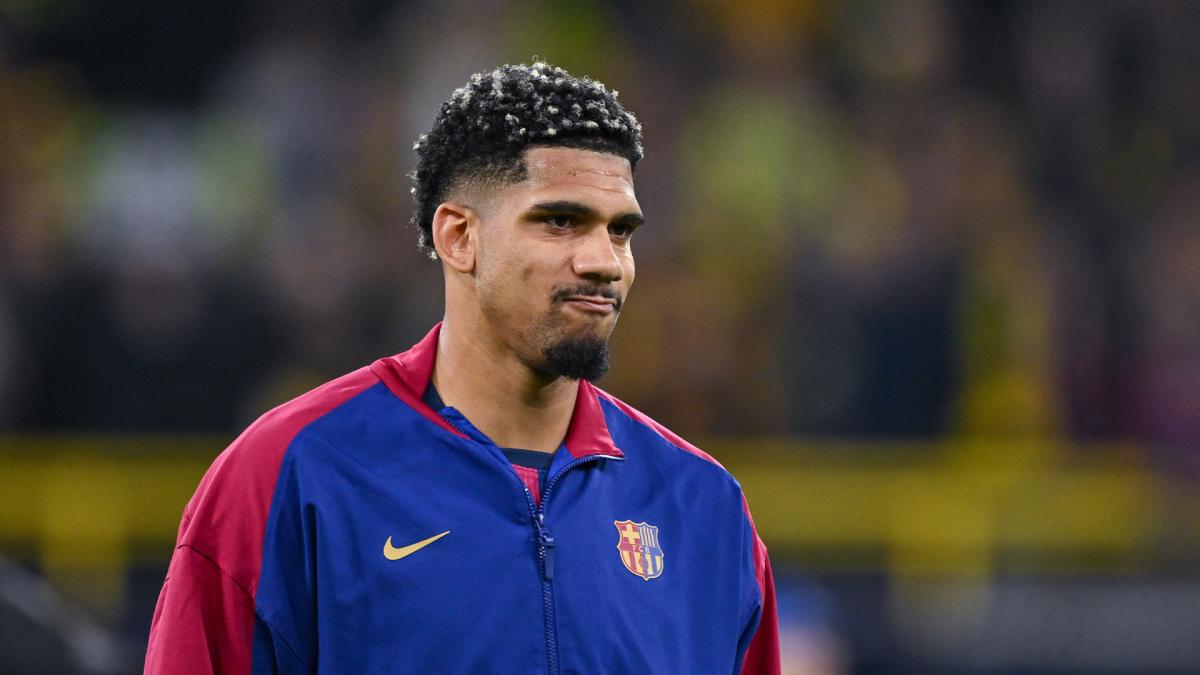
## Ronald Araujo: Frustration Over Referee Decisions
The recent UEFA Champions League encounter between FC Barcelona and Newcastle United saw an unfortunate series of events that left Ronald Araujo visibly frustrated. The Uruguayan defender’s experience highlights a growing concern regarding consistency in officiating during critical moments of the game.
### The Incident on the Pitch
During the first leg of the round of 16 match, which ended in a 1-1 draw, Araujo found himself compelled to leave the field due to cramps. In a moment of vulnerability, he crouched near the touchline to recover. However, as he attempted to return to the pitch, he was stopped by the referee, a decision that allowed Newcastle to capitalize on the moment. This lapse in personnel proved pivotal, as Newcastle’s Harvey Barnes scored shortly thereafter, exemplifying how crucial moments can swiftly change the tide of a match.
### Araujo’s Reaction
Post-match, Araujo voiced his bewilderment over the referee’s call, stating: “I don’t understand the rules. If I have a cramp, I can enter the field standing or even on all fours. I don’t understand the referee’s decision.” His words resonate with many fans and fellow players who question the clarity and consistency of officiating in high-stakes matches. Araujo further emphasized the unintended consequences of such decisions, noting that he felt “kicked out a second time” which hampered his ability to defend effectively.
### The Rulebook: A Need for Clarity
Araujo’s outburst points to a potential issue within the governing body’s rulebook. While rules exist to maintain fairness and safety on the field, their interpretation can vary widely among referees. In this scenario, the question arises: should players suffering from cramps be immediately allowed back onto the pitch to minimize disruptions? The existing protocols need a thorough review to ensure players can return safely while still upholding the integrity of the game.
### Impact on Team Dynamics
The implications of Araujo’s experience extend beyond his personal frustration. During such key moments in a match, players rely heavily on each other for support and defensive cohesion. When Araujo was sidelined, the Barcelona defense was momentarily thrown into disarray. While his teammates managed to eventually rally and equalize, the incident left a lingering sense of unease about the unpredictability of referee decisions and their ability to alter game outcomes.
### Conclusion
In the aftermath of the match against Newcastle, one thing is clear: Ronald Araujo’s frustration highlights a growing concern in football regarding referee decisions and rule interpretation. As players navigate the complexities of the game, it becomes increasingly important for governing bodies to ensure that the rules are not only clear but consistently enforced. This will not only benefit the players but also enhance the overall enjoyment of the beautiful game for fans around the world.