
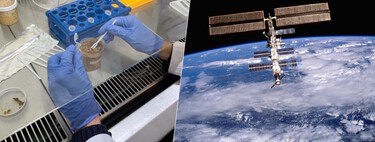
Chickpeas Take a Step Towards Lunar Agriculture
Researchers from the University of Texas at Austin and Texas A&M have made a groundbreaking discovery: they have managed to grow chickpea plants that complete their life cycle in a substrate designed to mimic lunar regolith. This development marks a significant milestone as it is the first time a legume of nutritional importance has germinated, flowered, and produced seeds in such an environment.
Understanding the Concept of Lunar Farming
The idea of growing chickpeas on the Moon sounds fascinating, yet it’s essential to clarify what this research entails. Although the headline suggests lunar farming, researchers have not successfully cultivated crops on real lunar soil, especially after tests in 2022 failed with actual regolith samples. Instead, this study focuses on transforming a sterile substrate into something akin to arable soil, leveraging the symbiosis between chickpeas and mycorrhizal fungi.
The Role of Mycorrhizal Fungi
The research team combined chickpeas with arbuscular mycorrhizal fungi, known to drastically enhance water and nutrient absorption. These fungi also boost plant resistance to stress and act as natural biofertilizers, presenting a practical solution to cultivating crops in hostile environments like the Moon.
Interestingly, they observed that chickpeas could flower and produce seeds in soil containing up to 75% simulated lunar regolith. Although no seeds were produced in a 100% regolith mixture, the progress is notable. Previously, experiments only demonstrated that plants could survive under extreme conditions; however, this research shows potential for actual crop production.
The Nutritional Aspect of Chickpeas
Chickpeas provide a vital nutrient profile, containing around 15 grams of protein per cup along with almost all essential amino acids. This is particularly important as space agricultural studies have primarily focused on short-cycle leafy vegetables, such as lettuce, which contribute little nutritionally. Chickpeas could serve as substantial dietary staples for astronauts.
Evaluating the Viability of Lunar Agriculture
However, a critical question arises: does it make sense to plant crops on the Moon right now? Raúl Herranz of CSIC notes that, given the need for 25% of soil, fungi, and worms, it may be more efficient to transport packaged chickpeas for the time being. The infrastructure and technology required for sustainable lunar farming are still in their infancy.
A Promising Future for Space Agriculture
This research represents only the beginning of our journey toward sustainable lunar farming. While there are many challenges to overcome, the fact that scientists are moving closer to realizing lunar agriculture is encouraging. With continued exploration and innovation, the prospect of growing a self-sustaining food source on the Moon may one day become a reality.
Image credit: Salvatore G2 – POT