
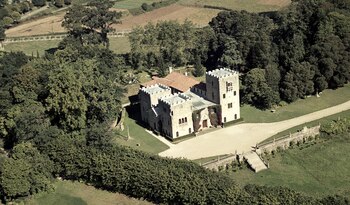
The Supreme Court’s Ruling on the Pazo de Meirás
The Supreme Court of Spain has definitively ruled that the Pazo de Meirás, a prominent estate formerly owned by the Franco family, is to be returned to the State. This historic decision confirms the previous ruling by the Court of A Coruña, mandating that the estate, embroiled in controversy due to its ties to dictator Francisco Franco, is now considered a public asset.
Historical Significance of Pazo de Meirás
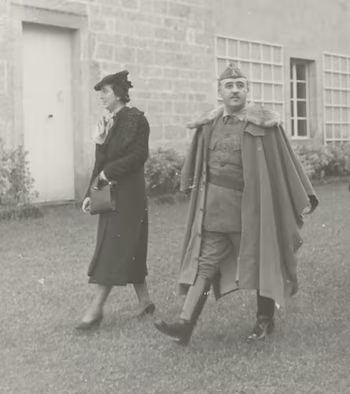
The Pazo de Meirás, located in the municipality of Sada, has a rich historical backdrop. Originally commissioned by the notable Galician writer Emilia Pardo Bazán, the manor served as the summer headquarters for Franco from 1938 until 1975. According to the Spanish Official State Gazette (BOE), the estate symbolizes both the power of the Franco regime and the expropriation that surrounded its acquisition. Following Franco’s death, the family continued to reside in the property until government claims transitioned the estate back into public ownership, supported by local and regional governments.
Legal Proceedings and Outcomes
In a lawsuit initiated by the State Attorney’s Office in 2020, the Court of First Instance number 1 of A Coruña ruled that the Pazo de Meirás rightfully belongs to the State, voiding the gift that had been made to Franco. By December 10, 2020, the estate transitioned from private property to state ownership. Subsequent endorsements by both the Provincial Court of A Coruña and the Court of First Instance number 70 of Madrid validated this decision, culminating in the Supreme Court’s recent confirmation.
Controversial Acquisition and Historical Context
The Pazo was given to Franco on December 5, 1938, by a board of local officials, including the civil governor and several mayors, under circumstances riddled with controversy. Reports indicate that coercive tactics were employed to expropriate adjacent properties, effectively expanding the estate at the expense of its rightful owners. The appropriation included various significant resources such as Romanesque statues and other cultural artifacts, all taken during a tumultuous historical period.
Community Support for Historical Justice
Various organizations, including the Commission for the Recovery of Historical Memory of A Coruña, view this ruling as a pivotal step toward addressing the unchecked legacy of Franco’s regime. Carlos Babío, president of the commission, highlighted the need for this decision to be “an exemplary sentence” that symbolizes a break from the impunity surrounding Franco-era expropriations. Concerns remain as other properties, like Casa Cornide, still lie in the hands of Franco’s descendants.