
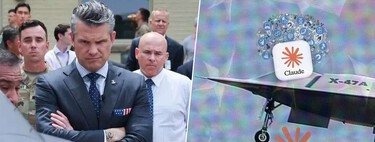
The ongoing tussle between Anthropic and the Pentagon has taken a significant turn, leading to the company being blacklisted. Following this contentious decision, Anthropic decided to take legal action against the U.S. Department of Defense, labeling the move as “unprecedented and illegal.”
What Has Happened?
In a recent lawsuit, Anthropic asserts that blacklisting them will result in irreparable harm to the company, undermining their business operations and relationships with customers and partners. An Anthropic spokesperson emphasized the company’s commitment to national security while stating that legal action was necessary. Despite the serious ramifications, the U.S. administration has yet to comment on the lawsuit.
A Lot of Money at Stake
By placing Anthropic on the blacklist, the government has effectively barred defense contractors from utilizing their AI technology, Claude, in any Pentagon-related activities. This action comes after a directive allegedly issued by Trump, demanding the entire government cease using Anthropic’s applications. As a consequence, government contracts are reportedly being canceled, with Anthropic’s commercial director, Paul Smith, noting the loss of one client alone could result in a staggering $100 million decrease in revenue.
Doubts About Legality
Many legal scholars believe Anthropic’s lawsuit could hold merit. According to reports from Lawfare, the “supply chain risk” label applied to Anthropic should not pass judicial review. Historically, this designation has aimed at foreign adversaries, such as Huawei, and does not adequately justify the punitive measures against a domestic company over corporate disagreements. Legal analysts suggest that the government’s labeling appears to stem more from an ideological vendetta than legitimate national security concerns.
The Disagreement
The crux of the dispute lies in Anthropic’s firm stance against certain applications of its AI. The company has explicitly rejected using its technology for mass surveillance or the autonomous development of lethal weaponry. Their rationale underscores a critical ethical concern: while a human soldier can refuse illegal orders, an AI lacks such moral judgment.
The Pentagon’s Response
The Pentagon’s rejection of Anthropic’s ethical boundaries reflects a broader tension between military objectives and corporate responsibility. Trump has been vocal about this conflict, stating on Truth Social that the fate of the nation should not rest in the hands of what he labels a “radical left-wing AI company.” This rhetoric amplifies the existing polarization surrounding the use of AI in military contexts.
Meanwhile, OpenAI Steps In
As Anthropic’s challenges mount, the Pentagon appears to be pivoting towards OpenAI as its AI partner of choice. According to reports, Sam Altman’s company claims to provide safer AI options. Still, this shift has sparked a public relations crisis for ChatGPT, with several high-profile resignations and user uninstalls as clients reconsider their options.
Although Anthropic has managed to secure favorable public perception, the future remains uncertain. Competitive disadvantages and financial losses loom large, suggesting that without a significant turnaround, Anthropic may face serious challenges ahead.
In summary, the unfolding legal battle illustrates the complex and often fraught relationship between emerging AI technologies and established military interests. As this narrative continues to evolve, the implications for both parties—and the broader tech landscape—could be profound.