
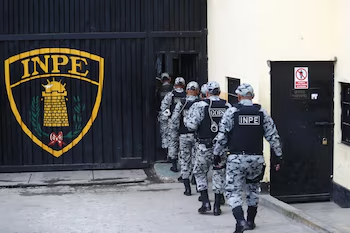
Controversial Appointment: Jorge Cotos Ochoa as INPE President
The recent appointment of Jorge Cotos Ochoa as the president of the National Penitentiary Institute (INPE) has raised significant concerns due to his controversial past involving irregularities and allegations of violence.
Background and Previous Sanctions
Cotos Ochoa’s history with the INPE is marred by a 2008 sanction for authorizing the improper transfer of inmates convicted of serious crimes, including aggravated robbery and kidnapping. During his tenure as director of the Lima regional office, it was discovered that he permitted these transfers using falsified court documents. Initially, he faced a 20-day suspension, which was later modified to a written reprimand following an appeal in 2014 by the Civil Service Court.
Legal Representation Funding
Despite his past misconduct, INPE’s controversial decision in 2019 and again in January 2026 allowed the use of institutional funds to cover Cotos Ochoa’s legal defense against allegations of abuse of authority. Such funding has sparked outrage as it involves public resources being allocated for personal legal matters closely tied to his administrative actions.
Allegations of Domestic Violence
In addition to his troubling professional history, Cotos Ochoa is also facing a complaint for psychological violence filed by his wife in 2016. However, details regarding the outcome of this complaint remain undisclosed, raising further questions about his suitability for leadership within INPE.
Significance of Appointment
Cotos Ochoa’s appointment comes at a critical time for the Peruvian penitentiary system, which has been criticized for its management and operational deficits. The nomination was recently formalized through Supreme Resolution No. 054-2026-JUS, signed by interim president José María Balcázar and endorsed by the Minister of Justice and Human Rights, Luis Jiménez.
Restructuring of the Penitentiary System
This appointment coincides with a significant restructuring of the national penitentiary framework, which aims to address persistent issues within the penal system. In January 2026, Balcázar’s predecessor, José Jerí, announced the formation of the National Superintendency of Internment and Resocialization (Sunir), intended to absorb the INPE and other rehabilitation-focused entities. This new structure is aimed at correcting the vulnerabilities noted in the existing custody and rehabilitation systems.
Looking Ahead: A Demand for Accountability
As the INPE undergoes restructuring, many stakeholders are calling for greater transparency and accountability in leadership roles. Cotos Ochoa’s past, characterized by serious allegations and administrative failures, has led to skepticism regarding his ability to lead reforms that are vital to public safety and the effective management of penitentiary resources.
His extensive experience in the penitentiary field cannot overshadow the critical ethical considerations tied to his previous actions. Moving forward, both the government and the public will closely monitor the effectiveness and integrity of the reforms being implemented under his leadership.