
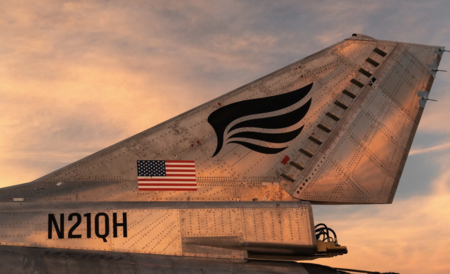
The race for speed in aviation has seen a resurgence, particularly with the introduction of innovative projects designed to push the boundaries of human flight. Among these ventures is the Quarterhorse Mk 2.1, an unmanned aircraft developed by the American company Hermeus. This ambitious project aims to establish new benchmarks in supersonic and hypersonic capabilities, a field that has seen little advancement since the SR-71 Blackbird set the manned speed record in 1976.
Understanding the Quarterhorse Program
The Quarterhorse initiative represents a revolutionary approach to aircraft development. Instead of focusing on a single groundbreaking vehicle, Hermeus employs a strategy of creating a series of progressively advanced prototypes. Each of these prototypes addresses specific challenges associated with high-speed flight. This iterative model not only facilitates rapid advancements but also enhances adaptability, allowing for adjustments based on real-time data and procedural analysis.
Recent Flight Tests at Spaceport America
The latest flight testing of the Quarterhorse Mk 2.1 took place at White Sands Missile Range, managing to validate key systems and support the broader testing campaign. Controlled from a ground station, the aircraft is equipped with advanced technologies that allow ongoing monitoring and systematic data collection regarding its aerodynamic performance and system operations.
Key Features of Quarterhorse Mk 2.1
The Quarterhorse Mk 2.1 has dimensions similar to those of an F-16 fighter jet and utilizes a delta wing configuration designed for high-speed aerodynamics. Featuring a variable air intake and a Pratt & Whitney F100 turbofan engine, the aircraft is equipped with the necessary capabilities to achieve significant speed thresholds.
Progressive Testing Strategy
The development narrative of the Quarterhorse Mk 2.1 revolves around staged testing. Initial sorties focus on verifying core systems and understanding its aerodynamic behavior before introducing higher-speed trials. Such a meticulous plan reduces risks and enhances the feasibility of subsequent models in the series, particularly the anticipated Mk 2.2, which aims to break the sound barrier.
Strategic Implications and Future Developments
The broader implications of developing high-speed aircraft like the Quarterhorse extend beyond sheer velocity. Key technologies being tested could support future applications in rapid cargo delivery and advanced reconnaissance operations, aligning with strategic defense needs.
The Path Ahead
Although the Quarterhorse program is still in the early stages, its recent progress marks an exciting milestone in aviation history. As the test campaign unfolds, the continuous validation of systems and flight capabilities will pave the way for more ambitious advancements. The ongoing development encapsulates a commitment to pushing the boundaries of what is technologically possible, making the Quarterhorse Mk 2.1 one of the most promising endeavors in the aerospace sector today.