
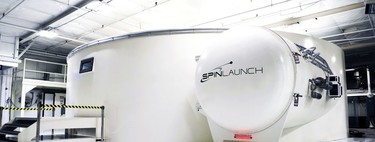
The Groundbreaking CHIEF1900: Compressing Space and Time
15 meters deep in a basement at Zhejiang University, China has installed the CHIEF1900, a remarkable machine that can replicate in mere hours what nature takes centuries to accomplish. With the capacity to rotate at extreme speeds and generate gravitational forces up to a thousand times that of Earth, this machine is poised to revolutionize our understanding of geological processes by simulating conditions similar to earthquakes and other natural phenomena.
Understanding Hypergravity
For geologists, the ability to analyze Earth’s history involves interpreting layered geological strata, each representing millions of years. However, nature’s process is slow, making it challenging to replicate experimentally. Enter hypergravity centrifuges like CHIEF1900, capable of rotating at extreme speeds and generating extraordinary gravitational forces. The result is a hypergravity environment that compresses both time and distance, effectively enabling scientists to observe geological processes in highly accelerated formats.
The Power of CHIEF1900
With a total capacity of 1,900g·ton, the CHIEF1900 surpasses its predecessor, the CHIEF1300, aimed at simulating massive land deformations, pollutant transport over millennia, and more. This centrifuge allows researchers to simulate pressures equivalent to seabed conditions at depths of 2,000 meters or to analyze how a 20-meter tsunami would affect the seafloor. The implications of this research are vast, extending to numerous fields such as civil engineering, environmental science, and disaster preparedness.
Why Does This Matter?
Natural disasters like earthquakes and tsunamis have devastating effects, often compounded by human activities such as dam failures or soil deformation from infrastructure. Understanding these phenomena requires reliable experimental data, which has historically been difficult to obtain. As Dan Wilson, deputy director of the Center for Geotechnical Modeling at the University of California states, CHIEF1900 will be among the top four dynamic centrifuges worldwide, simulating earthquake conditions with unprecedented precision.
Technical Achievements
To create a machine of this magnitude, Zhejiang University assembled a multidisciplinary team of experts in various fields, including civil engineering and thermodynamics. One of the major challenges was managing heat generated at high rotation speeds, which could destabilize the system. They solved this issue with a sophisticated cooling system that employs vacuum techniques, forced ventilation, and glacial coolant. Placing CHIEF1900 underground also minimizes external vibrations, ensuring the integrity of the experiments conducted.
Looking Ahead
Despite the completion of the installation in late 2025, scientific results from the CHIEF1900 have not yet been published. While the machine can accurately simulate various loads, it’s critical to be cautious regarding scaling effects; certain material behaviors do not always translate linearly under hypergravity conditions. To mitigate this risk, data obtained from CHIEF1900 will be cross-referenced with findings from similar facilities worldwide.
With CHIEF1900, scientists are on the brink of a technological leap that could reshape our understanding of geological processes and disaster preparedness, marking a significant milestone in experimental physics.