
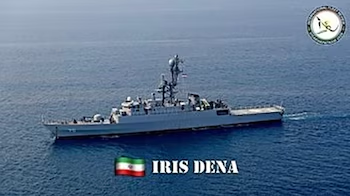
Sri Lanka’s Response to the Iranian Seafarers Incident
The Sri Lankan government has recently committed to addressing the rescue of Iranian seafarers under international law. This announcement comes in the aftermath of a tragic incident involving the sinking of the Iranian frigate, IRIS Dena, which was reportedly struck by a United States submarine. Amidst growing geopolitical tensions, Sri Lanka faces a delicate balancing act as it navigates its humanitarian responsibilities and international relations.
International Law as a Guiding Framework
At a recent forum in New Delhi, Sri Lankan Foreign Minister Vijitha Herath emphasized the importance of adhering to international law, specifically the United Nations Convention on the Law of the Sea (UNCLOS). Herath stated, “I think we have to follow UNCLOS… if we can restore international laws, then we can face any challenge as a country.” This commitment highlights Sri Lanka’s intention to approach the situation with a focus on legal frameworks and national neutrality.
The Incident and Its Aftermath
The crisis unfolded on a Wednesday when the IRIS Dena was hit by an American torpedo off the southern coast of Sri Lanka. The attack led to the loss of 48 crew members and the rescue of 32 survivors by the Sri Lankan Navy. Iran has labeled this event as an act of aggression in neutral waters, which complicates the situation further.
Amidst these developments, the Sri Lankan government faces pressure from Washington regarding the fate of the Iranian sailors. Despite this, the government’s declared stance is a strictly humanitarian one, though it has refrained from confirming or denying repatriation, signaling the sensitivity of the issue.
Managing Multiple Maritime Interests
Alongside the tragic fate of the IRIS Dena, Sri Lanka is also dealing with another vessel, the IRIS Bushehr. Following engine failures reported a day after the attack, the Bushehr and its crew of 219 were moved to the Trincomalee naval base in the northeast. This relocation aims to safeguard Sri Lanka’s neutrality and prevent escalating tensions within its ports.
Herath noted, “We have taken all measures in accordance with international laws and I believe that we do not need to support any of the parties.” This statement underscores the government’s commitment to maintaining a neutral stance in a highly volatile geopolitical landscape.
Conclusion: A Humanitarian Focus amidst Geopolitical Tensions
Sri Lanka’s approach to managing the aftermath of the IRIS Dena incident reveals a complex interplay between humanitarian action and international relations. The commitment to adhere to international law illustrates a broader intention to project neutrality while also fulfilling human rights obligations.
As the situation unfolds, all eyes will be on Colombo as it navigates external pressures while ensuring its domestic responsibilities are met. The current context serves as a reminder of the fragility of maritime security and the paramount importance of diplomatic conduct in addressing crises of this nature.