
Iran Accuses the US and Israel of Indiscriminate Attacks on Civilians
Overview of Recent Accusations
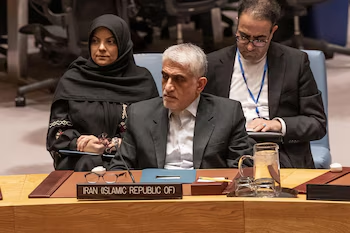
The Iranian ambassador to the United Nations, Amir Saeed Iravani, has levelled serious accusations against the United States and Israel, claiming that their military actions have intentionally targeted civilians in Iran. This assertion comes in the aftermath of a tragic incident in Lamard, Fars province, where over 18 female volleyball athletes were killed while training, with around 100 others injured. Iravani has termed these acts as “war crimes” and “crimes against humanity,” highlighting a significant escalation in tensions between Iran and the U.S.
Targeting of Civilian Infrastructure
In his recent speech, Iravani detailed a disturbing pattern of attacks on a wide range of civilian targets. These include airports, schools, hospitals, health centers, mosques, and police stations. The Iranian diplomat emphasized that the destructive actions aim to “terrorize civilians” and “cause maximum destruction and suffering.” He refuted claims made by Washington and Tel Aviv that the assaults were limited to military objectives, asserting that the attacks occurred in densely populated areas where civilians were present.
Shockingly High Casualty Figures
Among the most harrowing details shared by Iravani was the bombing of a girls’ primary school, which resulted in the deaths of 175 students. This catastrophic strike exemplifies the severe impact of the attacks on innocent lives. Currently, more than 180 minors have died due to the ongoing bombings, and dozens more are reported injured. Furthermore, over 20 schools have faced damage from these military operations, raising concerns about the safety of children in the affected regions.
UN Security Council’s Inaction
The Iranian ambassador expressed frustration at the United Nations Security Council’s lack of response to these distressing events. Iravani stated that Iran had sent repeated requests for intervention but found the Council to be “silent” and “turning a blind eye” to what he describes as egregious violations of International Law. This lack of action adds another layer of complexity to the ongoing humanitarian crises arising from these military operations.
Iran’s Right to Self-Defense
In light of these events, Iravani reaffirmed Iran’s commitment to its sovereignty and territorial integrity. He referenced Article 51 of the UN Charter, which recognizes a nation’s right to self-defense. Despite escalating tensions, he emphasized that Iran does not seek a broader conflict but aims to protect its population from external aggression.
Conclusion
Iravani’s statements serve to amplify the urgency of addressing civilian casualties and humanitarian concerns amidst military conflicts. As Iran continues to grapple with the repercussions of these alleged attacks, the international community faces pressing questions about not only accountability but also the adherence to International Law in conflict situations. The ongoing situation calls for heightened scrutiny and urgent diplomatic dialogue to avert a humanitarian disaster and seek a path towards de-escalation.