
## Life on the Edge: Grygoriï Gladych’s Resilience
### The Last Occupant of Saltivka
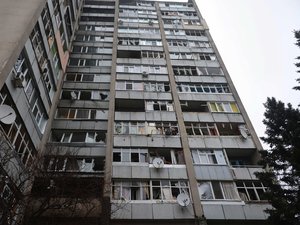
Grygoriï Gladych, a 79-year-old retiree, represents a poignant image of resilience in the war-torn city of Kharkiv. Living on the eighth floor of a severely damaged 15-story building in Saltivka, he has endured three years without essential utilities such as water, electricity, or heating. Once home to over 300,000 residents, this district has become a shadow of its former self, often referred to as a “ghost district” due to the relentless Russian shelling that has left most buildings in ruins.
### A Choice to Stay
Despite the opportunity to join his family in the Netherlands or return to his native village in western Ukraine, Grygoriï has chosen to stay. “And where would I go?” he asks, grappling with the emotional and practical burdens of eviction from a life he knows. His solitary existence serves as a reflective narrative of the many civilians who cannot— or choose not to—leave their homes, particularly the elderly who lack the means and energy to undertake such a significant life change.
### The Human Cost of War
The impact of the war is starkly visible around Grygoriï. He recalls how his neighbors and family fled as Russian forces began encircling Kharkiv at the onset of the invasion in 2022. Grygoriï has spent three brutal winters alone, relying on sporadic food rations and the occasional kindness of neighbors who stop by to share water or supplies. The war has altered the fabric of community life, yet amid the despair, small moments of solidarity remain.
### Coping in Isolation
Life for Grygoriï is a series of daily challenges marked by solitude. He occupies his time by using his smartphone but avoids television, which he believes “talks nonsense.” He reflects on his age, expressing a sense of futility in taking action beyond mere survival. “What to do? At our age, there is nothing to do,” he comments, emphasizing the despair that often accompanies the elderly in war zones.
### Memories of Resilience
Grygoriï’s past is rich with memories that contrast sharply with his current circumstances. Once a skilled house painter, he served in the Soviet army and worked in a tank manufacturing factory before retiring at age 60. Despite his past experiences, Grygoriï feels the weight of uncertainty regarding the future. “We don’t see the end. Look what’s happening. Nobody has said anything intelligent yet, neither Russia nor Ukraine. Nobody,” he claims, encapsulating the hopeless sentiment felt by many in the nation.
### Conclusion: A Voice in the Shadows
Grygoriï Gladych stands as a testament to the resilience of those who remain in conflict zones. His story is not just about survival but also the emotional complexities of loss, isolation, and the stubbornness of the human spirit. As the war in Ukraine continues, the voices of individuals like Grygoriï remind the world of the profound human costs involved. His refusal to leave his home is a powerful reminder of the deep ties to place, memory, and identity that persist even amid the harshest realities of life in a war zone.