
Context of Uribe’s Support
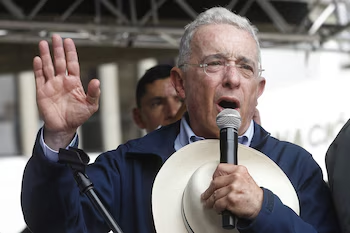
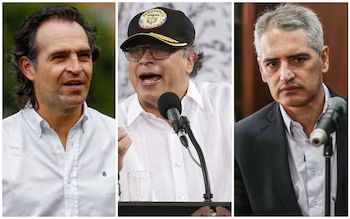
The plan to attack Medellín’s mayor, Federico “Fico” Gutiérrez, alongside Antioquia’s governor, Andrés Julián Rendón, during their visit to the Hidroituango hydroelectric plant on March 2, 2026, has sparked a significant political uproar. Former President Álvaro Uribe Vélez has openly expressed his support for the two regional leaders while sharply criticizing current President Gustavo Petro’s security policies, which he claims underestimate the threat level.
Uribe’s Response
In a bold move, Uribe utilized the X platform to label certain factions as “friends of terrorism,” directly referring to the threat posed by FARC dissidents, specifically the 36th front under alias Calarcá. He emphasized the urgent need for international support to combat the increasing influence of illegal armed groups in the region. This statement has reverberated across the political landscape, igniting a passionate debate about national security in Colombia.
The Call for International Assistance
Uribe underscored the necessity of international collaboration, saying, “Let the friends of terrorism tear their clothes shouting sovereignty, while we focus on the greatest expression of sovereignty: the security of our citizens.” His appeal highlights a stark division in how safety and security are approached in the current political climate, reflecting deep-rooted challenges in managing local and international alliances for security.
Intelligence Reports and Security Concerns
According to intelligence reports, there was a plan to utilize drones with explosives during a press conference that was set to include over 100 journalists. This alarming revelation prompted Gutiérrez and Rendón to cancel the event as a precaution. Despite these reports, the government defended its position, insisting there had been no credible threat detected, a stance met with skepticism from local leaders.
Government’s Dismissal of Threats
President Petro, along with Army Commander General Roger Gómez, publicly stated there was insufficient evidence to conclude an impending attack at Hidroituango. Petro questioned the motives behind the cancellation, suggesting political maneuvering overshadowed genuine security concerns.
Local Leadership’s Reaction
Gutiérrez and Rendón did not take kindly to the government’s dismissal of the threats. Gutiérrez accused Petro of indifference towards the safety of his political opponents, asserting that the administration’s leniency towards FARC is contributing to the increasingly dire situation. He emphasized that guarantees for public safety—especially for opposition members—are waning under the current regime.
Political Ramifications
The growing tensions between local leaders and the national government expose a rift in how security is perceived and addressed in Colombia. While the government insists there is no substantial proof of threats, local authorities are adamant that the situation represents a deterioration in public safety and demands urgent intervention. This incident underlines the precarious state of relations between regional and national governance in Colombia, as regional leaders appeal for concrete actions to safeguard citizens against threats posed by armed dissidents.
Conclusion
The situation surrounding the alleged attack plan against Gutiérrez and Rendón starkly illustrates the growing disconnection between local governance and the national administration in Colombia. As the public clamors for effective security measures, the contrasting views on threats and responses underscore the urgent need for a unified approach to restoring safety and confidence in democratic processes. Without addressing these concerns, the risk of political violence will likely continue to escalate.