
Overview of Recent Escalations
The geopolitical climate in the Middle East has dramatically intensified following a groundbreaking attack by the United States and Israel on Iran. This offensive, which took place on February 28, 2026, culminated in the death of Supreme Leader Ali Khamenei and multiple senior military officials. The aftermath of this event has seen significant retaliatory actions from Iran, altering the dynamics in this region profoundly.
Iranian Response
In retaliation for the joint U.S.-Israeli strike, the Iranian regime swiftly launched missile and drone attacks aimed not only at Israel but also striking U.S. military interests in the United Arab Emirates, Qatar, Saudi Arabia, and Bahrain. This broad retaliation has heightened security concerns across the Gulf region, leading to urgent shelter orders for U.S. diplomats and Israeli civilians.
Travel Disruption in the Region
Following the escalation of military actions, several international airlines, including Air France, Lufthansa, Turkish Airlines, SWISS, and Air India, announced the suspension of their flights to the Middle East. The closure of airspace in several countries reflects the growing apprehension surrounding safety in the region, complicating travel for many.
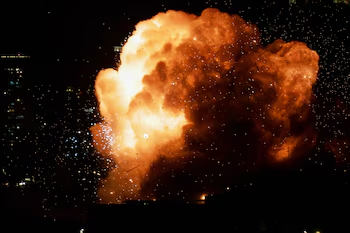
An explosion is observed in Tel Aviv as an Iranian missile strikes a building (AP / Tomer Neuberg)
Promises of Retaliation from Iran
On March 1, the Islamic Revolutionary Guard Corps vowed to enact a “hard and decisive” punishment for Khamenei’s death. In a public statement, they proclaimed their readiness to initiate “the fiercest offensive operation” against perceived enemies, underscoring the dire risk of escalating conflict.
Intelligence Insights: Targeting Khamenei
Operation Details
According to reports from the New York Times, the CIA had been monitoring Khamenei’s activities closely. They learned of a significant meeting scheduled in Tehran, which allowed U.S. and Israeli forces to execute the targeted strike. The intelligence community had tracked Khamenei’s movements for months, providing a critical window for this unprecedented military operation.
Current Developments
Ongoing Attacks
As of March 1, the Israeli military has confirmed the initiation of new assaults targeting areas described as “in the heart of Tehran.” This represents a dramatic shift in military strategy, marking the first wave of concentrated attacks since the commencement of Operation “Roaring Lion.” Reports from journalists encapsulating the scene indicated strong explosions and columns of smoke in Tehran.
Domestic Unrest in Iran
In response to Khamenei’s assassination, protests erupted, leading to violent clashes at the U.S. consulate in Karachi, Pakistan. Local authorities reported at least eight fatalities and numerous injuries. The unrest reflects the heightened emotions surrounding the attacks and the regional implications of Khamenei’s death.
U.S. and Israeli Military Adjustments
Reserve Mobilizations
In light of these developments, the Israeli Home Front Command has mobilized approximately 20,000 reservists to bolster civil defenses amid ongoing threats. This mobilization highlights the scale of the crisis and the urgent need for operational readiness in Israel.
U.S. Travel Warnings
The U.S. State Department has escalated travel warnings for Bahrain, urging citizens to reconsider their travel plans. Non-essential government personnel and family members have been authorized to leave Bahrain due to rising security concerns stemming from the conflict. This proactive measure showcases the alarming threats posed by potential Iranian drone and missile attacks.
Conclusion
The recent military engagements between Iran and the U.S.-Israel alliance mark a pivotal moment in Middle Eastern politics. With escalating violence and significant geopolitical implications, the world watches closely as this saga unfolds. The potential for further conflict is considerable, as both nations prepare for the next stages of heightened military operations.