
Introduction to the Habeas Corpus Case
The lawyer Jesus Barboza has filed a habeas corpus preventive measure aimed at President José María Balcázar. This legal document seeks to protect the president from what Barboza describes as threats against his personal freedom and ability to make decisions.
Details of the Allegations
In the demand, Barboza asserts that there exists a “certain, imminent, and serious” threat to Balcázar’s personal freedom, mental health, and the right to govern without undue pressure. He claims that there are acts of harassment and political pressures that have restricted the president’s ability to operate independently.
Concept of Institutional Kidnapping
Barboza uses the term “institutional kidnapping” not in the literal sense but to describe the alleged political coercion that limits Balcázar’s will. This notion has raised eyebrows, leading to discussions about the nature of political influence in governance.
Targeted Parties and Political Context
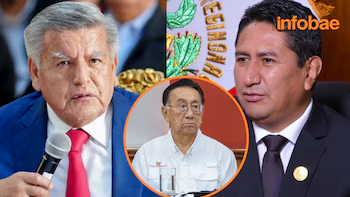
The lawsuit specifically names two major parties: Alliance for Progress (APP), led by César Acuña, and Free Peru, headed by Vladimir Cerrón.
APP: Intimidation and Pressure
Barboza’s document mentions alleged intimidating communications and political maneuvers from the APP that could have hampered Balcázar’s decision-making capacity. This adds a layer of complexity to the political landscape as accusations of intimidation become a common theme in a politically charged environment.
Free Peru: Alleged Infiltration
In terms of Free Peru, the lawyer highlights potential infiltration and the influence of individuals within Balcázar’s presidential circle. He suggests that these actors may be acting as filters, limiting the president’s autonomy.
Implications of the Allegations
The habeas corpus request not only points fingers at political leaders but also implicates individuals close to the president. Former officials and advisors are cited as possible pressure agents that may be exerting influence over executive decisions.
Judicial Response Pending
Barboza maintains that these allegations establish a worrying scenario jeopardizing the freedom and will of the president. A judge will ultimately determine if the case will be admitted and if any actions should be pursued based on the findings.
Public and Political Reactions
The timing of this legal filing corresponds with statements from economist Hernando de Soto, who echoed similar concerns about Balcázar’s precarious position under political pressure. His comments have sparked immediate backlash from the APP and Free Peru, who refuted any claims of ministerial distribution.
César Acuña’s Response
Acuña acknowledged he reached out to de Soto as a friend but clarified that he did not intend to imply any political coercion following a lack of response.
Cerrón’s Denial
From the opposing end, Cerrón has denied that Free Peru has any prior claim within the cabinet, asserting that there is no political interference in governance.
Conclusion: Navigating Political Waters
The issue of political influence is deeply rooted in the fabric of governance, and this habeas corpus case signifies a crucial moment for President Balcázar, challenging the dynamics between political power, autonomy, and public responsibilities. The legal outcome will likely set a precedent for future interactions within Peru’s political landscape.