
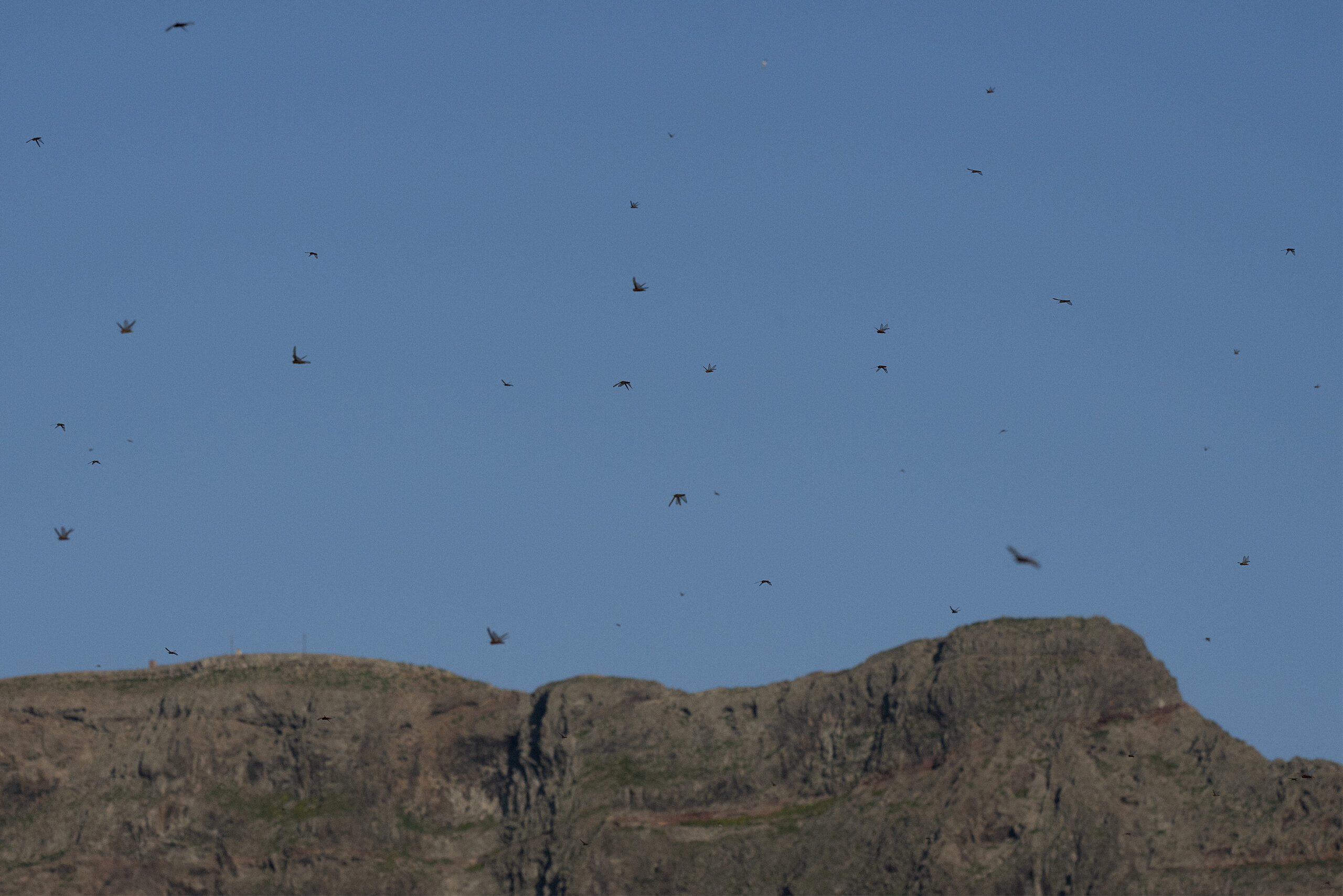
Haze and Saharan Winds Bring Locust Swarm to Lanzarote
Introduction to the Locust Situation
On February 25, 2026, Paco Fabelo, the head of the Environment Area of the Lanzarote Council, announced that the haze and strong winds from the Sahara have resulted in a swarm of locusts arriving on the island. Though primarily scattered, these locusts are causing concern among residents and environmental officials alike.
Conditions Favoring Locust Movement
Fabelo explained that the recent arrival of locusts coincided with days of haze driven by potent Saharan winds. Importantly, locusts typically do not migrate on their own; they rely on wind currents for movement. This year’s unique conditions have created a facilitating environment, with higher humidity levels noted along the Saharan coast.
Despite favorable winds, Fabelo stressed the critical role of soil moisture in the reproductive cycle of locusts. He pointed out that their lifecycle relies on adequate moisture, which has been lacking in Lanzarote due to a very wet winter, allowing for rampant reproduction in their native Sahara.
Concern Over Potential Reproduction
Fabelo urged caution, as any precipitation could provoke further reproduction cycles on the island itself. He stated that an immediate episode of rain would be “undesirable,” given the current reproductive behavior observed in locusts.
Current Locust Status: Scattered, Not Swarm
Fabelo clarified that, following recent analyses, the locusts are not present in swarms but are seen as isolated, scattered individuals. These locusts are primarily adults, with some in the early stages of maturity, which could pose further risks if conditions remain conducive for reproduction.
Agricultural Concerns
While Lanzarote’s landscape is currently lush, Fabelo indicated that the presence of natural barriers such as meadows and grasses may help protect agricultural areas from being decimated by these insects. However, he underscored the need to monitor the situation closely, as the agricultural zones could be threatened if the locust numbers increase.
Methods of Control
To combat the locust problem, Fabelo discussed potential measures such as the use of flamethrowers, as these insects are repelled by smoke. However, he noted that this approach would be necessary primarily if larger swarms were to materialize, as currently, the infestation consists of only isolated individuals.
Current Observations
At present, locust sightings have predominantly been reported along the west coast of Lanzarote, with isolated individuals also noted in Arrecife. While the situation appears manageable for now, Fabelo made it clear that the unpredictability of wind movements could lead to wider dispersal throughout the island.
Conclusion
As Lanzarote grapples with this latest environmental challenge, the region remains vigilant. Officials will monitor weather patterns closely, preparing to respond appropriately to prevent the potential escalation of this locust situation. The residents of Lanzarote must remain informed and alert as the winds continue to play a significant role in shaping the ecology of this unique island.