
Investigation into Allegations Against Tank Trucks in Colombian Political Campaigns
Overview of the Allegations
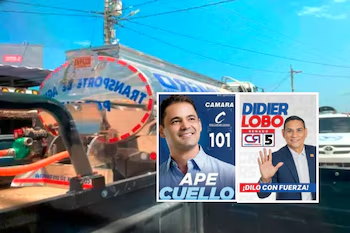
In a troubling turn of events during the recent congressional elections in Colombia, journalist Jacobo Solano has publicly denounced the practices of candidates Ape Cuello and Didier Lobo. Both candidates are seeking re-election for the House of Representatives and the Senate, respectively. Solano asserts that their campaigns have resorted to unethical tactics, offering drinking water to vulnerable communities in exchange for votes, exacerbating existing issues surrounding access to basic services in these regions.
The Role of Tank Trucks in Campaigns
The allegations detail the use of tank trucks and bottles to deliver water to constituents, with the stipulation that beneficiaries sign a form indicating their support for Lobo or Cuello. This strategy reportedly targets regions where clean water is scarce, creating a contentious dynamic between the candidates and the communities they seek to represent.
Residents in Aguachica have come forward with testimonies indicating that those who refused to sign the forms were denied access to water. This practice raises serious ethical questions about electoral integrity and the exploitation of vulnerable populations.
Government Response to the Controversy
In light of these accusations, Colombia’s Minister of Defense, Pedro Sánchez, has taken a proactive stance. He announced that the National Police, in coordination with the Attorney General’s Office, has initiated a criminal investigation concerning potential voter corruption. The government emphasizes a commitment to upholding electoral transparency and has already conducted inspections on the vehicles cited in the complaints, although issues surrounding their affiliation with the candidates remain unresolved.
Continued Campaign Activities Amidst Scrutiny
Despite the mounting scrutiny, reports suggest that campaign events involving water distribution persisted even after the allegations gained attention. Solano documented further incidents and expressed outrage on social media, highlighting community members’ frustrations over being deprived of essential resources due to their voting choices.
Clarifications on Disturbing Allegations
Minister Sánchez also addressed rumors circulating on social media about police involvement, clarifying that the individual implicated was not part of the National Police but rather a municipal traffic agent. He urged citizens to report any instances of corruption or electoral misconduct, pledging an unwavering commitment to justice and transparent electoral processes.
Conclusion
While the campaigns of Ape Cuello and Didier Lobo have not publicly responded to these allegations, the controversial tactics employed—utilizing essential resources like water as leverage for votes—raise significant concerns about the ethical landscape of electoral politics in Colombia. As investigations continue, the focus remains on ensuring accountability and protecting the integrity of the electoral process. The commitment of the Colombian government to transparency may serve as a precedent for how similar situations are handled in the future, making it critical for citizens to remain vigilant in demanding ethical conduct from their leaders.