
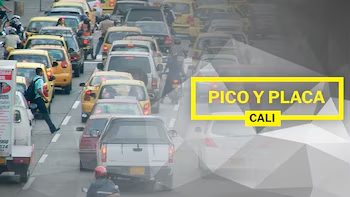
Understanding the Pico y Placa in Cali
The Pico y Placa program is crucial for regulating vehicle circulation in Cali, Colombia. On Wednesday, February 25, drivers must prepare to adhere to specific restrictions to avoid fines. This system aims to reduce traffic congestion and pollution by limiting the number of cars on the road based on their license plate numbers.
Vehicle Restrictions for February 25
According to the Mayor’s Office of Santiago de Cali, vehicle restrictions are determined by various factors including the day of the week, license plate endings, and vehicle types. On this particular day, the restrictions are as follows:
- Private Vehicles: Last digits 5 and 6 are restricted.
- Taxis: Not affected by the restrictions.
- Public Transport: Last digits 0 and 1 are restricted.
- Motorcycles: Not affected by the restrictions.
The restrictions are in place from 6:00 AM to 7:00 PM on weekdays, ensuring that the roads are safer and less polluted during peak traffic times.
Importance of Staying Informed
It’s essential for drivers to remain updated on the daily changes to the Pico y Placa program. With restrictions changing each day, a lack of awareness can lead to unexpected fines. Adhering to these guidelines not only helps avoid penalties but also contributes to the broader goal of reducing vehicular traffic and environmental impact.
Upcoming Changes for the Second Half of 2025
Looking ahead, the Mobility Secretariat of Santiago de Cali will implement new restrictions based on the last digit of license plates from July 1 to December 31, 2025. The rotation will be as follows:
- Monday: 3 and 4
- Tuesday: 5 and 6
- Wednesday: 7 and 8
- Thursday: 9 and 0
- Friday: 1 and 2
Exempt Vehicles
Not all vehicles are subject to these restrictions. The following types are exempt:
- Emergency vehicles
- Official service vehicles, including diplomats and consular vehicles
- Vehicles transporting individuals with disabilities
- Hybrid and electric vehicles
- Cargo vehicles with capacities over 5 tons
- Motorcycles
Consequences of Non-Compliance
Violating the Pico y Placa regulations can result in significant penalties. According to Article 131 of the National Land Traffic Code, offenders can face fines equivalent to 15 days of the current minimum wage. Given that the daily minimum wage in Colombia is 47,450 pesos, fines can accumulate to approximately 711,750 pesos.
Conclusion
By understanding and adhering to the Pico y Placa restrictions, drivers can contribute to a healthier environment and avoid heavy fines. Staying informed about daily changes ensures safer, more efficient travel in Cali.