
Unveiling the Mysteries of Snowball Earth
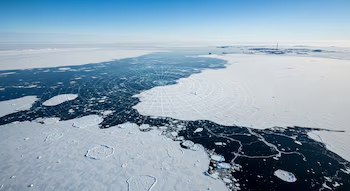
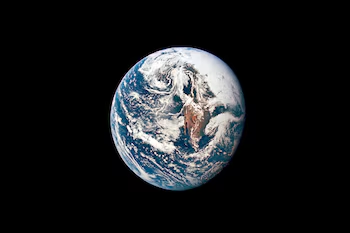
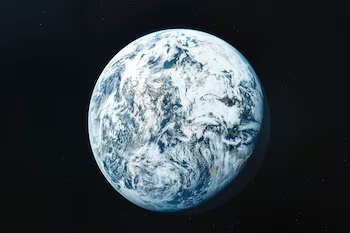
Recent research by an international team of scientists has revealed that ocean temperatures plummeted to a staggering -15 °C during the “Snowball Earth” era, approximately 700 million years ago. This groundbreaking discovery challenges previously held beliefs about life’s resilience in extreme environments.
Extreme Conditions and Ocean Salinity
The findings published in Nature Communications indicate that ancient oceans had salinity levels more than four times higher than today. This unusual condition allowed water to remain in a liquid state even below freezing temperatures. These recorded temperatures are at least 12°C colder than any modern ocean, raising questions about how life could thrive in such harsh conditions.
Understanding Iron Deposits and Anomalies
Analysis of marine rock iron deposits reveals heavy particles, a geological anomaly puzzled researchers for decades. A team led by Ross Mitchell and Paul Hoffman concludes that the frigid ocean conditions explain the formation of these layers. Concurrent research by Maxwell Lechte from the University of Melbourne suggests that the iron deposits formed when oxygen-rich meltwater interacted with dissolved iron in the ocean. The extreme cold and heightened salinity encouraged the creation of heavier iron oxides.
This groundbreaking research discards other explanations like glacial erosion or hydrothermal activity. Experts now concur that the combination of extreme temperatures and salinity transformed ocean chemistry, leaving distinctive traces in geological records.
Resilience of Life in Hostile Environments
The increased salinity and cold environment posed significant stress on microorganisms, phytoplankton, algae, and sponges of the Cryogenic era. Scientists are investigating how life persisted despite these extreme conditions. Survival strategies may have included adaptations to hydrothermal vents, areas with low oxygen, or even pools of meltwater in ice shelves, akin to those found in present-day Antarctica.
Fatima Husain, a geochemist at MIT, posits that these surface environments enabled biological diversification following the Cryogenic. The discovery of live bacteria in cold, salty brines under Lake Vida further supports the notion that life can thrive in extreme niches, adapting to challenging conditions.
Conclusion: Redefining the Limits of Habitability
The reconstruction of ocean temperatures and salinity during “Snowball Earth” significantly alters our understanding of the limits of habitability. Research indicates that life not only endured extreme cold but thrived, diversifying as conditions improved. This study raises critical questions about life’s resilience in the face of global disasters and offers invaluable insights for the exploration of life in extreme environments on other planets or icy moons.
Ultimately, the insights gained from this research highlight the biological tenacity that characterizes Earth’s history, positioning the Cryogenic era as both the most inhospitable chapter and a testimony to life’s remarkable resilience.