
The Historic Discovery Beneath Pontevedra
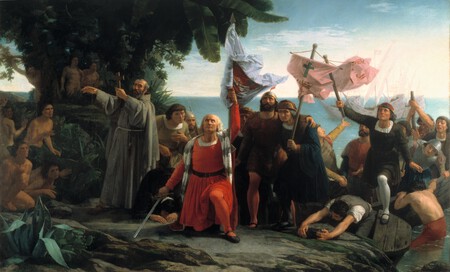
October 12, 1492, marks a pivotal date in history when Christopher Columbus and his expedition reached Guanahani Island, forever bridging the gap between the Old and New Worlds. Recently, a significant discovery in southern Galicia has reignited interest in Columbus’s maritime past and the ships he commanded.
Uncovering Finca do Teucro
In the heart of Pontevedra, residents have been closely monitoring a 14,000 m² area known as “Finca do Teucro”. This plot, located near the Lérez River, is set for urban development. However, a specialized archaeological team was tasked with determining whether any historically significant artifacts lay hidden beneath its surface.
Exciting Archaeological Findings
While initial excavations yielded a nostalgic find—a former sports court used by the local team, SD Teucro, in the 1960s—the deeper layers of Finca do Teucro revealed something exceptional: a medieval shipyard. Archaeologists uncovered a stone wall and a small dock, believed to be remnants of a construction site where light boats were built and repaired.
The Role of Medieval Shipyards
According to Alberto Oubiña, Pontevedra’s Councilor for Urban Planning, these shipyards were crucial for constructing vessels used primarily for fishing and local river transport. Unlike larger ships built for warfare, these shipyards focused on creating small crafts ideal for navigating the region’s waterways, marking a significant chapter in Pontevedra’s maritime history.
Columbus and Pontevedra’s Seafaring Legacy
During the presentation of this discovery, Oubiña made a comment that resonated beyond Galicia: some theorize that one of Columbus’s caravels may have been crafted in Pontevedra. While this assertion is purely speculative—since the shipyard appears more suited for smaller barges than for large ships—the idea has stirred local imaginations and reignited discussions about the origins of Columbus’s fleet.
The Connection to Santa María
Among Columbus’s three famous ships—the Niña, Pinta, and the Santa María—the latter has attracted special attention. Often referred to as “La Gallega,” some historians propose that the Santa María was built in Galicia. The theory is not entirely new; it dates back to the 19th century, supported by claims that the ship’s nickname hints at its origins.
Importance of the Theories
This theory gains significance for multiple reasons. Firstly, it opens discussions regarding the legendary Santa María, a ship that played a crucial role in Columbus’s expedition. Secondly, it introduces another fascinating hypothesis: Columbus himself might have had Galician roots, with suggestions linking him to notable figures in 15th-century Galicia.
Conclusion
As excavations continue at Finca do Teucro, the intrigue surrounding Columbus and his legacy is only set to grow. These findings not only add depth to Pontevedra’s maritime history but also continue to foster connections to the age of exploration, a period marked by both monumental discoveries and enduring mysteries.
Images | Wikipedia 1 and Wikipedia 2