
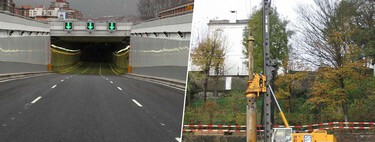
Since January 2025, residents of Madrid’s Paseo de Extremadura have been grappling with the ramifications of burying four kilometers of one of the city’s key arteries. The entrance to the capital via the A-5 has transformed into a daunting maze of traffic jams, making it a dangerously chaotic thoroughfare likened to an urban ‘Mario Kart’ track. Beyond mere congestion, the stranglehold on access to Madrid has serious implications for those living in the metropolitan southwest, notably Alcorcón.
Rush hour in Madrid is always a challenge, but with lanes cut on a major highway and detours already brimming with traffic, the situation has become untenable. To alleviate some of the strain, a BUS-HOV lane was introduced, allowing buses to travel from kilometer 14 to Parque Oeste de Alcorcón. Despite assertions that the worst of the construction is behind us, a significant bottleneck persists between the capital and municipalities such as Alcorcón, Móstoles, and Boadilla.
This BUS-HOV lane has unwittingly ignited a controversy between the town councils of Alcorcón and Madrid.
A Road as a Political Weapon
This situation has led to a flurry of accusations. The Alcorcón council criticizes ongoing construction and operational measures, claiming they cause delays at one of the city’s most crucial commercial hubs. Ironically, the dedicated bus lane remains underutilized while private vehicles congest the roads.
Part of the issue lies in the fact that the bus lane occupies valuable road space, restricting private vehicles from utilizing the full road width. Ideally, if buses were operating efficiently, this would not be a significant issue. However, reports from The Alcorcón Gazette highlight residents’ requests to abolish the lane and restore the road for general use. Yet, the mayor insists on extending the BUS-HOV lane to Príncipe Pío, which is already in the capital.
Candelaria Testa argues that extending the lane to the M-30 tunnel is crucial for connecting Alcorcón’s residents to the capital. However, she faces opposition from constituents who demand that decongestion efforts in Alcorcón take precedence before focusing on those traveling to Madrid.
Madrid’s City Council, represented by Mobility delegate Borja Carabante, has responded. According to reports from La Razón, Carabante assures residents that the completion of the tunnel is imminent and that by year-end, all buses will directly reach Príncipe Pío.
In turn, Carabante accuses Testa of “putting spokes in the wheel of the work,” and what started as a mere traffic issue has escalated into a broader conflict between both town councils. Community members have voiced frustration, calling on their mayor to engage the Minister of Transportation, Óscar Puente, for potential solutions, as local leaders appear to prioritize political disputes over residents’ daily challenges.

Unfortunately, this scenario represents just another chapter in a saga of disruptive construction that continues to burden residents and commuters. Unplanned interruptions in internet, electricity, and water service have also been reported, further frustrating daily life. Constant noise pollution accompanies these ongoing works, leaving residents to hold on to the elusive hope that “the worst is over.”
If you are among those who navigate this route daily, you might find solace in that phrase, though whether it offers real comfort remains to be seen.
Images | Madrid City Council, DGT
In Xataka | The icing on the cake for Madrid’s works: the city has become a gymkhana of reforms, cuts, and annoyances