
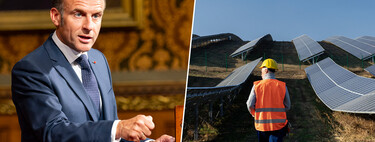
Spain and Portugal: The Disparity of Energy Availability
While the Iberian Peninsula registers a surplus of renewable energy at remarkably low prices, the rest of Europe grapples with soaring triple-digit energy costs. The reason for this disconnect is rooted not in natural resources, but in political maneuvering and nuclear interests, particularly of France. The northern neighbor acts as a barrier, obstructing the flow of affordable energy southward and protecting its nuclear industry at the expense of its European counterparts.
Two Europes Disconnected
Recent electricity pricing data from February 11 vividly illustrates the rift within the continent. According to records from OMIE and ESIOS, Spain’s average daily electricity price plummeted to €4.23/MWh, with instances of negative pricing reaching -€0.42/MWh. Portugal surpassed this extreme, with prices averaging at €0.34/MWh, effectively making electricity almost free.
However, just crossing the Pyrenees unveils a drastically different scenario. Central and northern Europe is awash in red on the price map; Germany pays €100.62/MWh, Belgium €72.04/MWh, and the Netherlands €88.70/MWh. France, luxuriating in its strategic location, enjoys a comfortable price of €13.61/MWh, capitalizing on the cheap importation from the south while maintaining the status quo for its northern neighbors. This stark contrast exemplifies the concept of an “energy island”: a resource-rich peninsula lacking the necessary connections to distribute its bounty.
The Crisis of Wasted Energy
This auspicious supply of cheap electricity may appear beneficial for consumers, yet it signifies a significant systemic inefficiency. Spain is currently forced to undertake curtailment measures, discarding approximately 7% of clean energy because it cannot be transmitted through the existing network. This waste not only devalues the market but also presents a precarious landscape for renewable energy investors, who need profitability to spur further growth.
The internal energy network in Spain is at a breaking point. The CNMC delays key capacity map releases, indicating that 90% of network nodes are saturated. Only 12% of new connection requests are approved, meaning that despite having the energy, Spain lacks the infrastructure to transport it to new industries and households.
France’s Nuclear Protectionism
Given the apparent surplus of energy in the south and shortage in the north, the question arises: why not create an “electric highway”? The response lies in what can be described as nuclear protectionism. President Emmanuel Macron has dismissed interconnections as a “false debate,” attributing Spain’s struggles to an over-reliance on renewables unsupported by its grid.
However, data contradicts this narrative. Spain is not entirely renewable—closing 2025 at 55.5%—and during crises in 2022 and 2025, it provided power to France when its nuclear plants faltered due to various issues.
According to Roberto García Merino, CEO of Redeia, the blockage is not a technical issue, but a matter of geopolitical strategy. France aims to protect its substantial investment in nuclear energy, fearing that cheaper solar power from Spain would undermine the competitiveness of its reactors. Consequently, key interconnection projects have explicitly been excluded from France’s 2025-2035 network plan, maintaining the Iberian Peninsula’s status as an energy island, with only 2.8% interconnection—far below the EU goal of 15%.
Potential Path Forward
Brussels is losing patience with the situation. The European Commission has issued an ultimatum to France, giving it nine months to resolve these connectivity issues and prepare a commitment declaration. Meanwhile, the only hope on the horizon is the long-awaited submarine cable project through the Bay of Biscay, with laying campaigns scheduled for 2026 and expected to be operational by 2028.
An Urgent Conundrum
Within the EU, a disconcerting paradox unfolds. Spain, with its vast renewable resources, finds itself yearning for energy autonomy while a key partner like France keeps the route to the south firmly shut. If Spain could serve as Europe’s green battery, why is this potential wasted? Until the necessary infrastructure is built, Spain’s wealth in energy resources will continue to be undermined, lost in negative pricing and waste. All the while, France plays the role of a strict guardian, obstructing the emergence of a true energy union across Europe.