
Spain’s Urbanizations: A Reflection of Unique Demographics
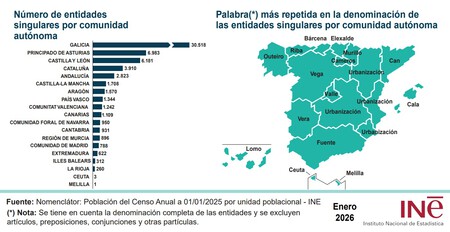
The recent infographic released by the National Institute of Statistics (INE) presents a captivating visual representation of Spain’s diverse population settlements. Labeling regions and communities as “towns,” this term encompasses not only municipalities but also smaller and often isolated nuclei. While at first glance it may seem just a collection of statistics, this data reveals profound implications about historical, demographic, and social challenges faced by each community.
A Linguistic Mosaic
As you traverse your local municipality, you may notice common words on license plates—a fascinating mixture of geographical and social terminologies such as “road,” “place,” “valley,” “cove,” and “path.” Traveling across Spain, this list morphs drastically due to a blend of linguistic, demographic, and historical aspects unique to each region. The INE dedicates an entire section of its research to dissecting this linguistic diversity, underscoring how community names reflect their specific histories and characteristics.
The Dominance of ‘Urbanization’
Intriguingly, the INE’s analysis reveals a significant trend: in several regions—specifically Murcia, Castilla-La Mancha, Aragón, and the Valencian Community—the most frequently used term is not related to natural features but rather to the concept of “urbanization.” This nomenclature highlights not only the human impact on the land but also suggests significant urban development and socioeconomic progress within these communities.
Regional Variations: A Closer Look
Delving into regional specifics, the INE’s findings indicate that the most prevalent terms vary widely across the country. For instance:
- Galicia: ‘Outeiro’ (a rise or hill)
- Asturias: ‘Riba’ (bank or riverbank)
- Castilla y León: ‘Vega’ (a river meadow)
- Extremadura: ‘Vera’ (a plain)
In contrast, in the Community of Madrid, “valley” reigns supreme, while in Catalonia, “can” (meaning ‘house of’) is notably common, reflecting the area’s architectural influences.
Population Distribution and Fragmentation
The INE data also unveils striking disparities in population distribution across various regions. For instance, Galicia, despite its smaller area of about 29,600 km², boasts a staggering 30,518 unique population entities. In comparison, Castilla y León, the largest community at approximately 94,244 km², houses only 6,181 unique settlements. Such findings provide insight into the territorial structure of each region and the extent of population fragmentation.
The Aging Population Challenge
Beyond raw numbers, the INE’s tables convey crucial information about the population structure within these singular entities. Notably, smaller settlements tend to house older populations. For example, locations with fewer than 50 residents have an average age of 54.4 years, while those with populations between 500 to 1,000 reflect a younger average age of 46.6 years. In larger communities exceeding 10,000 individuals, the average age drops to 44.1 years. This demographic trend poses significant challenges, particularly as these smaller areas host merely 1.2% of the Spanish populace, highlighting the urgent need for targeted community initiatives.
Conclusion
The INE’s findings encapsulate a multifaceted view of Spain’s urban landscape, revealing how language, geography, and demography intertwine. By understanding the significance of these unique names and the relationships behind population distributions, we can gain valuable insights that drive effective regional development strategies and tackle the challenges presented by an aging population. In fostering awareness of these dynamics, Spain can move towards a more equitable and sustainable future for all its citizens.