
Televisions evolve, technologies transform, but some interactions remain timeless. One prime example is the remote control, a device that has allowed us to engage with technology from afar, albeit its original concept bears little resemblance to the remote controls we use today.
While televisions gained popularity in the latter decades of the 20th century, the idea of a remote controller emerged much earlier, specifically in 1901. Notably, one of the forerunners of this innovation was Spanish engineer Leonardo Torres Quevedo.
The Controller That Anticipated Televisions
The journey of the remote control dates back to the early years of the 20th century. In 1903, Torres Quevedo, an accomplished inventor, mathematician, and engineer, created and patented the world’s first remote control, known as the Telekino.
The Telekino, as fascinating as it was, differs vastly from today’s remote controls. Due to the technological limits of the time, it occupied an entire table. The miniaturization of devices hadn’t yet become a reality.
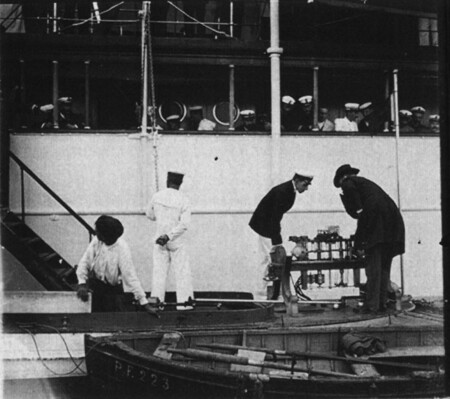
Telekino in Abra. Image: Torresquevedo.org
Interestingly, the Telekino was not initially designed to control televisions. The technology to create televisions was only realized later with the development of cathode ray tubes. Torres Quevedo’s original intent was to control airships remotely, which would help mitigate dangers during testing. He eventually adapted the design for boats, a factor noted by various historical references.
In 2007, the Institute of Electrical and Electronics Engineers (IEEE) recognized the Telekino’s significance by including it in its esteemed list of engineering milestones, a first for any Spanish invention, alongside those of Benjamin Franklin, Alessandro Volta, and Guglielmo Marconi.
Understanding Telekino’s Legacy
The term Telekino itself is derived from Greek, where tele means “distant” and kinein translates to “movement.” Sadly, the Telekino did not receive the admiration it deserved during its time, even causing Torres Quevedo to abandon the project due to lack of support.
A prototype of the Telekino can be found today at the Torres-Quevedo Museum, part of the Polytechnic University of Madrid. This museum offers insights into other groundbreaking inventions by Torres Quevedo.
Innovations Beyond Remote Control
Leonardo Torres Quevedo is also credited for pioneering the first Spanish airship and the innovative cable car renowned for ferrying people. Patented in 1887, his cable car made its debut decades later in San Sebastián. Notably, a variant of this technology even reached Niagara Falls, offering safe transport for millions over its lifetime.
Additionally, Torres Quevedo played a vital role in the early development of computing with creations like the Ajedrecista, considered the first chess-playing machine, and an electromechanical arithmometer, a precursor to modern calculators.
Torres Quevedo’s legacy wonderfully illustrates how early innovations set the stage for the technologies we often take for granted today.