
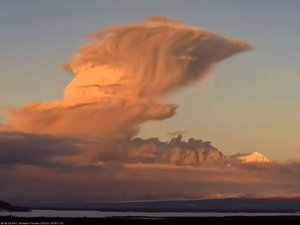
The Shiveluch volcano, one of the most active in the Far East of Russia, erupted dramatically on January 28, launching an impressive column of ash that soared to an altitude of 9,000 meters. This eruption, reported by the Geophysical Service of the Russian Academy of Sciences, produced an ash plume that extended over 110 kilometers to the west, highlighting the volcano’s explosive potential and the geological dynamics of the Kamchatka Peninsula.
Understanding the Eruption of Shiveluch Volcano
Situated on the Kamchatka Peninsula, Shiveluch encompasses two main components: the ancient Stary Chiveluch caldera and the active Molodoi Chiveluch volcano. This remarkable geological structure is estimated to be between 60,000 to 70,000 years old, showcasing a long history of volcanic activity.
When Shiveluch erupted, it released an ash column that not only reached nearly 9,000 meters above sea level but also sent fine particulate matter drifting into the troposphere. Local officials communicated via social media, sharing videos that illustrated the dramatic gray plume expanding across the sky—a visual testament to the eruption’s intensity.
Geographical Impact
The ash plume’s impressive reach of over 110 kilometers west of the volcano poses various concerns for nearby regions. The Kamchatka Volcanic Eruption Response Group (KVERT) reported that an orange air alert was issued in the vicinity, indicating a heightened level of volcanic activity and potential hazards to air travel and health. This alert serves as a critical caution for residents and travelers alike, especially as the ash particles can impact air quality and aviation safety.
Volcanic Activity in Kamchatka
The Kamchatka Peninsula is renowned for its rich volcanic landscape, home to numerous active volcanoes, each with its unique characteristics. Shiveluch, rising to about 3,300 meters, is among this revered group. The area’s geological activity arises from the convergence of tectonic plates, resulting in frequent eruptions and making it a hotspot for researchers and volcanologists.
Moreover, the region remains sparsely populated, which somewhat mitigates risks to human life during such eruptions. However, it is crucial to monitor the ongoing activity closely, as shifts in behavior can occur rapidly, potentially increasing threat levels.
Community Response and Preparedness
The eruption has galvanized local authorities to formulate responses and preparedness strategies. As emphasized in recent statements, staying informed through channels like Telegram is vital for disseminating accurate updates. Communities have learned from previous eruptions to adopt effective warning systems and evacuation plans, ensuring safety in a region defined by its geological volatility.
Looking Ahead
As scientists continue to study Shiveluch and other volcanoes in Kamchatka, understanding their behavior will enhance prediction and response capabilities. With each eruption, valuable data is gathered that may aid in forecasting future events and safeguarding both the local population and the environment.
In conclusion, the eruption of the Shiveluch volcano on January 28 serves as a poignant reminder of nature’s power and unpredictability. As communities and authorities navigate the aftermath, the focus remains on safety, preparedness, and scientific inquiry into one of Earth’s most fascinating phenomena.