
Logroño: A Town in Crisis
Logroño, a quaint town in Santa Fe, Argentina, is home to roughly a thousand residents. Following the abrupt closure of a cotton ginning project, the community faces an uncertain future. This incident highlights not only the economic challenges but also the environmental consequences associated with industrial pursuits in fragile ecosystems.
The Closure of the Cotton Project
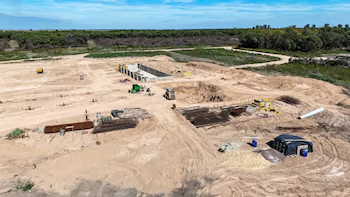
The turmoil began when the Ministry of Environment of Santa Fe initiated legal actions against Algoservicio SA. The company, which had acquired land in Logroño, began clearing land for a cotton ginning plant without proper authorization. Approximately 50 hectares of native forest were decimated, violating the Forest Law, which aims to protect high conservation areas.
Provincial sources confirmed that despite warnings from the Ministry, the company continued its work and even began to install the plant. As a result, the venture faced legal scrutiny, leading to its closure in March 2025. The environmental damage was acknowledged, but the broader implications for the town were unforeseen.
Economic Impact on the Community
The shutdown left Logroño without any productive investments or job opportunities. Local leaders, like community president Mariana Cardozo, expressed grave concerns. Families struggle to afford basic meals, with some considering going a full day without food. Single mothers are placed in distressing positions regarding the welfare of their children.
The young people of Logroño are particularly affected, with many contemplating leaving to find work elsewhere. As the town becomes more economically stagnant, the fear of disappearing from the map increases among its residents.
Mobilizing for Change
In response to their plight, residents initiated a petition addressed to Governor Maximiliano Pullaro to create a dialogue. The document, signed by over 300 community members—nearly a third of the town’s population—calls for public discussions about viable alternatives to revive their economy without disregarding environmental laws.
The petition underscores the need for public participation in environmental decisions that significantly impact local communities. Residents argue that high-impact environmental choices must be preceded by thorough consideration of their implications for human livelihoods.
Demands for Sustainable Solutions
Residents are not calling for the disregard of the Forest Law or its judicial implications. Instead, they seek to find a middle ground that allows for productive activities while respecting environmental protections. The community insists that industrial development cannot occur at the cost of their natural resources and livelihoods.
The communal president emphasizes that while environmental responsibility is vital, it is equally crucial to consider the residents’ needs. The proposed cotton plant could have created around 50 direct jobs, which would have been a significant boost for Logroño’s economy.
Conclusion: The Future of Logroño
As the crisis unfolds, Logroño’s situation serves as a poignant reminder of the delicate balance between economic development and environmental protection. The community’s determination to advocate for their future underscores the pressing need for sustainable solutions. With the residents actively working towards a government dialogue, there is hope that alternatives may emerge, ensuring that Logroño will not be another forgotten town in an industrial tale gone wrong.