
Spain’s Victory in Vietnam’s High-Speed Rail Project
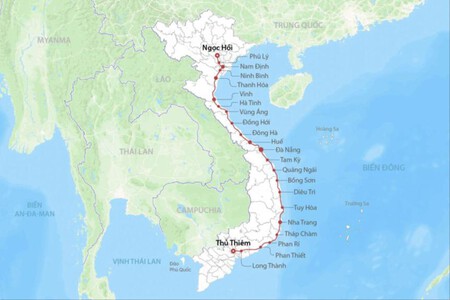
Ineco and Renfe have secured the initial contract to develop Vietnam’s first high-speed line, which spans a 1,541-kilometer corridor connecting Hanoi and Ho Chi Minh City, with a planned investment of $67 billion. This monumental project highlights Spain’s growing influence in global railway construction, particularly in emerging markets.
Importance of the Project
Vietnam’s choice to rely on Spanish expertise reflects a broader trend among countries investing in high-speed rail networks. Renfe brings over 30 years of experience running its AVE (Alta Velocidad Española) service, operating the second-largest high-speed network in the world, following China.
As Spain faces a saturated national market, it has transformed its railway model into a strategic export commodity. The contract in Vietnam follows a recent visit by Pedro Sánchez, Spain’s Prime Minister, reaffirming the commitment of Spanish railway operators to maintain a foothold in dynamic, developing regions.
A corridor that would pass through almost the entire coast of Vietnam. Image: Óscar Puente (X)
Project Details and Key Players
The winning consortium, led by Ineco and including French company Artelia and local partner RCIC, is set to commence work immediately. Renfe Proyectos Internacionales will serve as the primary collaborator. According to El Economista, the consortium will spend over ten months performing technical, economic, and operational feasibility studies, as well as basic engineering to outline project scope, requirements, and costs.
Ineco will oversee various project components, including rail layout, civil works, tunneling, and electrical supply, using Building Information Modeling (BIM) methodology. This foundational work is essential for guiding the Vietnamese government’s decisions on future project phases.
Expanding Presence in International Markets
The Vietnam high-speed rail project adds to an already impressive list of international railway endeavors undertaken by Spanish companies. For instance, the Haramain High-Speed Railway in Saudi Arabia, which spans 450 kilometers between Mecca and Medina, is one notable success.
Spanish firms are building a strong international presence, with Renfe providing international services in France, Talgo operating in Uzbekistan and Germany, and Ineco involved in projects across multiple continents, including Rail Baltica in Europe and the Dallas-Houston corridor in the U.S.
A Strategic Expansion Strategy
The collaboration strategy, which includes both public and private sectors, has already yielded 134 contracts across 34 countries for Ineco. Renfe aims to derive 10% of its income from international markets by 2028. This expansion includes alliances with Central Japan Railway to enhance competitiveness in high-speed projects.
Conclusion: The Road Ahead
The next crucial step is whether Spanish firms can also secure contracts for the construction and operation phase of the Vietnamese high-speed rail project. With a potential market of over 100 million inhabitants, this project opens the door to extensive opportunities in Asia, as Ineco has already established an office in Singapore and is eyeing other countries like Thailand and Japan.
In conclusion, the victory in Vietnam showcases not only Spain’s engineering prowess but also its growing influence in international railway projects. Óscar Puente, a prominent figure in this initiative, has expressed pride in the expanding global footprint of Spanish railway companies.
Cover image | Sam Williams and Kabelleger / David Gubler