
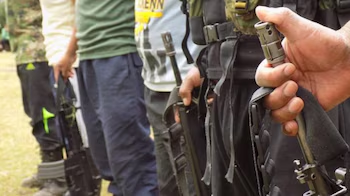
Kidnapping in Catatumbo: A Harrowing Tale of Coercion
In the volatile Catatumbo region of Norte de Santander, Colombia, a shocking incident unfolded when a 12-year-old girl and her mother were kidnapped by FARC dissidents. This violent act was not only a crime against the individuals involved but also a distressing example of how armed groups exploit vulnerable children to propagate fear.
The Kidnapping Incident
According to reports from RCN News, the young girl was initially playing in a park in the town of Tibú when several armed individuals approached her and her mother, revealing their identity as members of the dissident faction. They announced that the pair would be taken captive to further their own agenda. The minuscule safety children should expect in their communities is thrown into stark relief by such events.
In a distressing video, the girl recounted her harrowing experience, stating, “They grabbed me alone in the park and took me to Paloquemao and told me that my mission was to take a photo. If I didn’t do it, I was going to pay for it.” Her words encapsulate the terror and manipulation that these children face on a daily basis.
Exploitation and Fear
The kidnappers forced the girl to record a message designed to intimidate other children in the region. In her video, she expressed her feelings of exploitation, saying, “They took advantage of my childhood and my innocence to send a message to the children of Catatumbo.” This tactic is a ruthless form of psychological manipulation, aiming to instill fear and silence dissent among the youth.
The traumatic experience lasted for a week, after which both the girl and her mother were eventually released. However, the experience left deep scars—both psychological and emotional—that are difficult to measure.
Background: The Catatumbo Conflict
The conflict in Catatumbo has intensified due to ongoing battles between FARC dissidents and the National Liberation Army (ELN). As these groups vie for control, they have increasingly resorted to the kidnapping and manipulation of minors. Reports indicate that more than 89,000 people have been displaced due to the violence, and tragically, at least ten minors have lost their lives amidst this chaos.
This disturbing trend of using children for propaganda exposes the broader humanitarian crisis affecting the region. Access to education and basic security has become compromised, depriving entire generations of the chance for a brighter future.
A Call for Action
Social organizations and advocates like Carmen García, a leader from the group “Mothers of Catatumbo for Peace,” have raised their voices in protest. They demand immediate action from both illegal armed groups and the national government to ensure the protection of children. García emphasizes the importance of dialogue, urging authorities to establish meaningful conversations with armed factions to pave a path toward peace.
García’s poignant remarks highlight the urgency of the situation: “We continue to reject these facts in which minors are used to serve these conflicting groups.” The burden of fear and trauma rests heavily on communities, especially on mothers who risk their lives to protect their children.
Conclusion: Protecting Our Future
The kidnapping of this young girl serves as a tragic reminder that children should never be pawns in conflicts. The need for urgent intervention to safeguard the rights and futures of minors in Catatumbo cannot be overstated. Ending the cycle of violence and ensuring a peaceful environment for future generations must be the collective responsibility of all stakeholders involved. The plight of these innocent children calls for immediate action, compassion, and a shared commitment to building a safer world.