
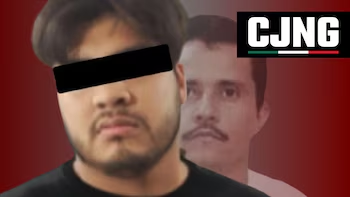
Who is “El Uber”? The Head of CJNG in Guadalajara
The Arrest of José Gabriel Soto Martínez
The arrest of José Gabriel Soto Martínez, also known as “El Uber” or “Bravo,” marked a critical disruption in the operational framework of the Jalisco New Generation Cartel (CJNG) in Guadalajara. On January 13, federal forces, including components of the Secretariat of National Defense (SEDENA) and the National Guard (GN), executed an operation in the Las Cañadas subdivision of Zapopan, Jalisco.
Authorities conducted extensive intelligence work and surveillance that revealed safe houses and the escape routes utilized by Soto Martínez. Their findings led to the confiscation of weapons, luxury vehicles, methamphetamines, and multiple cell phones along with his arrest.
Role within CJNG
At only 26 years old, Soto Martínez had rapidly ascended to become the head of the CJNG plaza in Guadalajara. His responsibilities included orchestrating drug sales, extortion, kidnapping, and homicide within the region. Considered a primary instigator of violence, he operated under the direction of notable figures like Hugo Gonzalo Mendoza Gaytán (alias “The Toad”) and Audias Flores Silva (“The Gardener”). These connections link him intimately with the CJNG structure led by Nemesio Oseguera Cervantes, famously known as “El Mencho.”
Violence and Criminal Activity
Soto Martínez and his cell are implicated in a significant wave of violence across the metropolitan area of Guadalajara. Their operations are connected to an alarming statistic: approximately 16,000 reported disappearances in Jalisco since 2006. This includes activities related to forced recruitment for the cartel’s ranks and the establishment of criminal training camps.
The Corridos of “El Uber”
Unlike many notorious figures in the drug trade, the public persona of José Gabriel Soto Martínez was less visible until two corridos, “The Uber Compa” by Norteño Push and “I am the Uber” from Dejados Norteño, provided insights into his life. Released in 2022, these songs detail his rise in the criminal hierarchy, showcasing both his ambitions and his violent past.
In “The Uber Compa,” Soto Martínez’s beginnings in crime and his involvement in skirmishes against law enforcement are put into narrative form. The lyrics reflect his early desires to wield firearms and luminary connections to high-profile cartel leaders. The song humorously references the origins of his nickname, suggesting he began as an Uber driver, only to pivot to a life of crime: “I left Uber, and the trips I have taken are guaranteed; I send them to the afterlife.”
A Dual Life Portrayed
Both corridos depict Soto Martínez as someone who has successfully navigated the intricacies of cartel politics. His narrative emphasizes his loyalty and effectiveness, labeling him as “one of Oseguera’s people.” Moreover, lyrics explicitly discuss his luxurious tastes—favoring high-end fashion brands such as Gucci and Dolce & Gabbana—while capturing the duality of his violent existence and pursuit of enjoyment in nightlife.
In the songs, he references financial activities, suggesting involvement in money laundering and the operations of specialized violent units that report to El Mencho.
Conclusion
The arrest of “El Uber” symbolizes a crucial moment in the ongoing battle against organized crime in Mexico. Through his story and the corridos that recount his life, we witness not only the brutality of the drug trade but the cultural narratives that emerge from it. His rise illuminates a larger framework of loyalty, ambition, and the complex nature of criminal enterprises in contemporary society.