
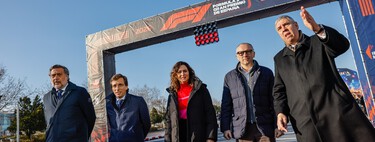
The official website says that “you no longer have to imagine it. Now you can live it.” But the current state of things makes it difficult for many to envision this lofty promise. As we stand nine months away from the potential opening of the first Formula 1 street circuit in Madrid, dubbed Madring, it appears to be far from ready. The streets, lined with half-assembled curves, hardly evoke the rush of F1 racing or the possibility of witnessing legendary drivers like Fernando Alonso on their roads.
The Road Ahead: Timeline and Concerns
The anticipated start date for racing is September 11, with cars expected to race through the streets of Valdebebas, one of Madrid’s PAUs, near the expansive IFEMA complex. The layout aims to showcase urban layouts that attract significant investment and elevate the city’s global image. However, surrounding the circuit lies a landscape of residential buildings and the long-stalled City of Justice, which has laid half-finished for over two decades.
As we count down to just 243 days until the Grand Prix, skepticism lingers: will Madrid truly return to the Formula 1 calendar?
Current Progress and Challenges
According to the FIA, everything appears to be progressing smoothly, with no apparent delays or issues reported. A visit by a commission from the International Automobile Federation suggested that the construction in Valdebebas is under scrutiny yet on track. However, updates from IFEMA reflect a cautious optimism. While paving has begun under less than ideal weather conditions, completion of the final asphalt layer is not expected until summer.
Yet, doubts loom over the viability of the project. Italian media sources report that Liberty Media, the owner of Formula 1 rights, contemplated replacing Madrid with Imola on the 2026 calendar, raising alarms about Madrid’s preparedness.
State of the Circuit: An Embryonic Phase
Evidence on the ground indicates that significant work is still required. Visitors to Valdebebas describe the circuit as largely unmodified and ill-fitted for F1 cars. Many sections are merely ready for regular pedestrian traffic, highlighting a major deficit in readiness for racing.
With only a mere few exceptions, it can be challenging to visualize the circuit’s intended design, including the much-anticipated Monumental curve. Currently, areas designated for racing are described as muddy sites, with parts of the circuit still lacking a proper asphalt layer.
Environmental and Community Challenges
Opposition from local residents compounds the uncertainty surrounding the circuit. Many community members voice complaints regarding anticipated noise pollution and disruptive construction. Local environmental organizations raise alarms about the project’s potential ecological impact, stressing concerns over wetlands and the preservation of longstanding trees.
This local discontent echoes a wider trend seen in other cities. Historical examples like the Yeongam circuit in South Korea and unfulfilled promises in areas like Las Vegas and Hanoi demonstrate the complex relationship between Formula 1 events and local community support.
Conclusion: The Road Ahead
The upcoming months will be pivotal as Madrid seeks to finalize its position on the Formula 1 calendar. As progress continues, it’s essential for both the organizers and local officials to address community concerns while ensuring the infrastructure is ready in time for the anticipated September deadline. The clock is ticking, and Madrid’s aspirations for hosting a dynamic Grand Prix are as high as the stakes involved in the completion of the circuit.
Photos | IFEMA