
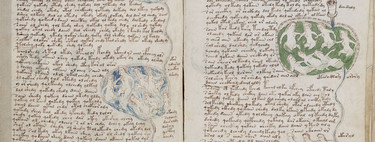
The enigmatic Voynich Manuscript has intrigued scholars, cryptographers, and curious minds alike for centuries. Despite numerous attempts by some of the brightest intellectuals in history, this manuscript remains undeciphered, adding to its allure as the “most mysterious book in the world.”
Recently, however, a new perspective has emerged, one that doesn’t aim to decipher the manuscript’s text but instead explores its construction. This innovative approach, while not solving the mystery, opens up exciting avenues for understanding.
What Is the Voynich Manuscript?
The Voynich Manuscript is believed to have been created between 1404 and 1438, but its origins and purpose remain shrouded in mystery. Rediscovered in 1912, this peculiar book is filled with illustrations of bizarre plants, astrological symbols, unidentifiable creatures, and naked figures, making it an extraordinary artifact of medieval history.
Scholars agree that the text within this manuscript represents a natural language or a code derived from a natural language, as indicated by its compliance with Zipf’s Law. This law governs the frequency of word appearances and is a hallmark of genuine languages, distinguishing the Voynich text from constructed languages of the era.
Ongoing Fascination with the Manuscript
Despite the decades—if not centuries—of failed attempts to decipher it, a passionate community of “Voynichians” continues to support research into the manuscript. This eclectic group, composed of enthusiasts from various backgrounds, remains dedicated to uncovering its secrets.
A New Proposal: The Naibbe Cipher
The latest development comes from renowned science journalist Michael A. Greshko, who presented a fresh approach in the magazine Cryptology. He introduces what he calls the “Naibbe cipher,” a method that allows natural languages such as Italian and Latin to be converted into a pseudo-writing resembling the Voynich text. Greshko’s method carefully maintains key properties like glyph frequencies and word lengths.
This proposal is particularly intriguing because Greshko is not attempting to “read” the manuscript; he is demonstrating that a text similar to the Voynich manuscript could be generated from common languages of the time using viable 15th-century cryptographic tools.
How to Create Your Own Voynich
For those inspired by Greshko’s work, creating a personal version of the Voynich Manuscript at home is quite feasible. According to his research, the Naibbe method involves breaking words into smaller blocks and employing randomization techniques—such as rolling dice or drawing cards—to generate unique texts. This approach also incorporates a homophonic cipher, designed to complicate frequency analysis, which is a significant deciphering tool.
The Ongoing Mystery
So, have we solved the Voynich Manuscript mystery? Not by any means. Greshko’s exploration does not provide a definitive answer but rather highlights the methods that could have led to the manuscript’s creation. The advent of artificial intelligence has yet to crack the Voynich code, often due to a lack of clarity regarding what to seek in the text.
Ultimately, the Voynich Manuscript continues to outsmart us, and while we may not yet understand it, this ongoing pursuit of knowledge keeps the excitement alive for everyone fascinated by this antiquity.
Image | Gunnar Klack