

Discovery of Visual Communication in White-Tailed Deer
Recent research from the University of Georgia has unveiled a fascinating aspect of white-tailed deer communication. During the reproductive season, male deer have been observed marking trees and the ground not just through traditional olfactory signals but also via photoluminescence. This communication method involves markings that glow under ultraviolet light, adding a new visual dimension to their interactions.
The Role of Territorial Marking
Territorial marking is essential for white-tailed deer (Odocoileus virginianus). Males utilize frontal glands and urine to attract females and deter rival males. They achieve this by rubbing their heads against tree bark, depositing glandular secretions, and creating areas in their territory that they later urinate on. Historically, scientific understanding has centered around the concept that these signposts are predominantly detected through scent.
Photoluminescence: A New Era of Understanding
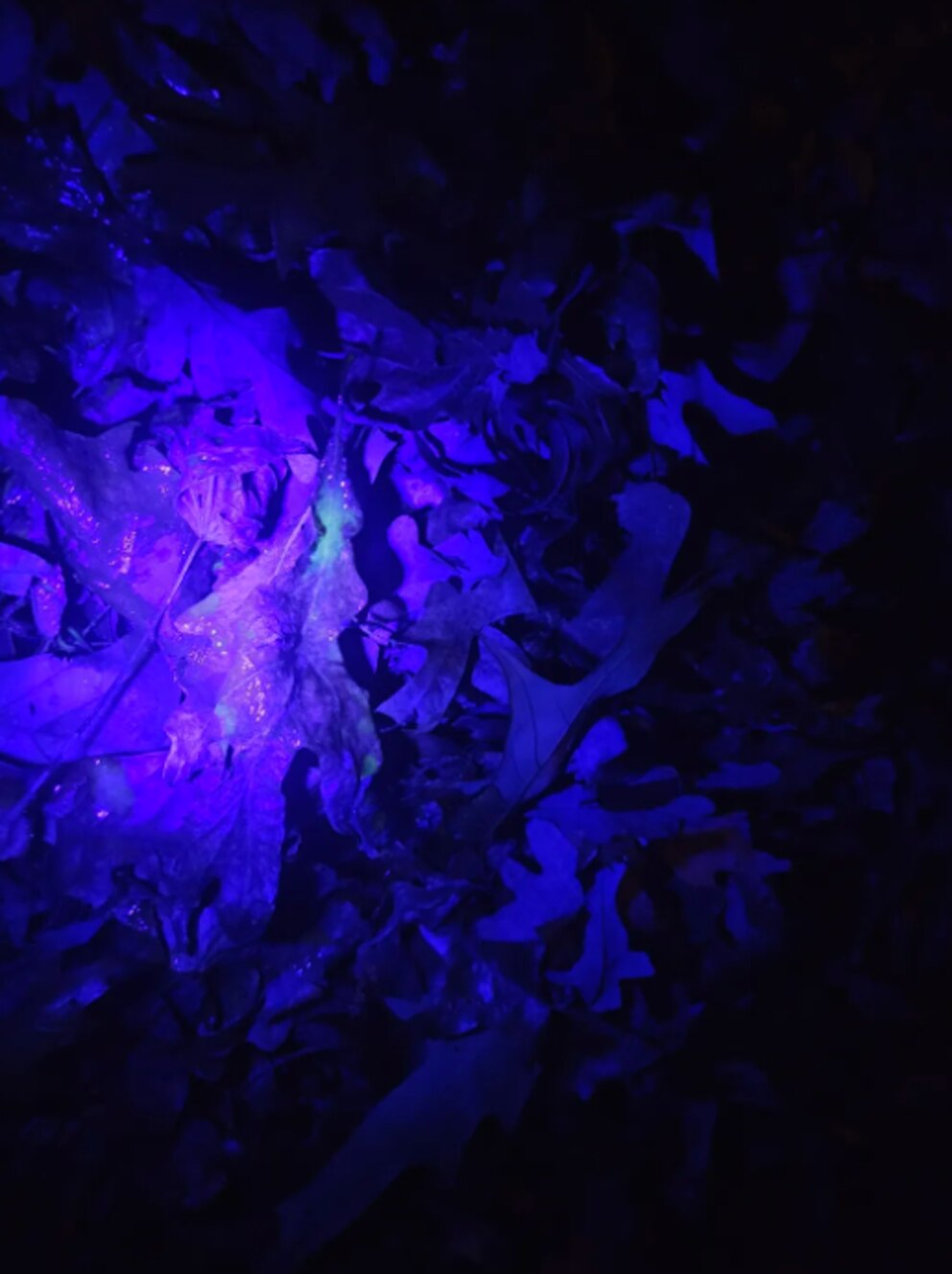
The study reveals that these marks are capable of being visually highlighted through photoluminescence. Under ultraviolet light, urine and glandular secretions emit a striking turquoise blue glow. As Gino D’Angelo, an ecologist involved in the research, noted, “To a deer at dusk, these markings may look like glowing signs, like neon signs on a highway.” This suggests that male deer can not only smell their territory but potentially see these markings as well.
Research Methodology
To uncover these findings, the research team analyzed 146 marking sites in Whitehall Forest near Athens, Georgia. Using two wavelengths of ultraviolet light during twilight conditions, the researchers compared light emissions from marked areas against unmarked areas. Their analysis revealed a marked contrast between the visuals captured in these settings, confirming that the urine emitted a light intensity that was distinctly visible, likened to “spilled white paint.”
Implications of Visibility
The photoluminescence persisted throughout the mating season, with greater intensity as the season progressed. This phenomenon appears to be strategically important for various reasons, such as intimidating rivals, attracting females, or aiding in territorial orientation. D’Angelo proposed that even if the wind disperses the scent, residing deer can still rely on visual cues to navigate their environment.
Future Research Directions
While this study opens up exciting avenues for understanding deer communication, Linda Reinhold, a zoologist at James Cook University, emphasized the need for further investigation. The study primarily utilized artificial ultraviolet light, leaving the real-world efficacy of natural light conditions unverified. Ongoing research aims to evaluate whether deer can discern these luminescent signals in their natural habitat.
In conclusion, the discovery of photoluminescence adds a layer of complexity to how white-tailed deer interact during their mating rituals. This remarkable finding not only changes our understanding of their communication but also invites further exploration into the sensory lives of these animals. As research continues, we inch closer to uncovering the full extent of social and territorial behaviors in wildlife.