
Three Kings’ Day Silver Memory: A Journey Through Childhood Creativity
The Anticipation of A Single Gift
On the eve of Three Kings’ Day, children in Latin America often experience a blend of excitement and nostalgia. For those who grew up in the 1950s, 1960s, and 1970s, the anticipation of receiving a single gift marked this special occasion. This custom instilled a deep sense of value and appreciation for the toys they received, often cherished for an entire year. In contrast, today’s mass-produced toys blur the lines between worth and transient pleasure.
Ingenious Play with Minimal Objects
Children from earlier generations transformed everyday items into toys brimming with creativity. Memories echo with stories of makeshift go-karts crafted from recycled tin sheets and wooden scraps. The very act of creating something valuable from waste showcased ingenuity that ignored societal limitations. For instance, Jorge recalls using cans of minced meat to build enduring souvenirs, illustrating how minimal objects could foster lasting memories.
The Role of Nature in Play
Natural elements also played a pivotal role in childhood games. Lucas shares how Mistol fruit, instead of shop-bought marbles, became a favorite for games of precision and skill. Such adaptations reveal a fundamental truth: creativity is born from necessity, turning what some might deem rubbish into treasures of play.
Collective Outdoor Experiences
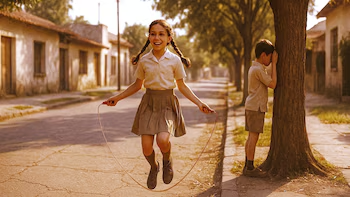
Outdoor spaces were a living playground filled with games like hopscotch, elastic, and polythieves. Children engaged in these shared activities, focusing on collaboration and communication. These games often relied on simple, flexible rules passed down verbally, emphasizing community over competition. Clara’s memory of “elastic for everyone” encapsulates this spirit of inclusion that marked the playgrounds of a bygone era.
The Evolution of Toys and Gender Roles
Memories of childhood also reveal the distinct gender divisions in play. While boys often engaged in rough-and-tumble games, girls were typically relegated to dolls and kitchen sets. The disparity in play equity is exemplified through stories like Marilina’s, where her desire to participate in a boys’ game led her to be categorized as simply a “cook.” Such moments highlight the social roles that were unwittingly reinforced during play.
Toy Fails and Disappointments
Expectations surrounding toys could lead to disillusionment too. Alex recalls a disappointing experience when he and his friends anticipated a “microspy” only to receive a flimsy gadget that failed to deliver. This incident serves as a poignant reminder of how the yearning for a special toy can lead to both joy and heartache.
The Shift from Handmade to Mass-Produced
As time progressed, the landscape of toys transformed. By the 1970s, board games began to dominate family life, introducing an array of themes and strategies. Games like “El Estanciero” reflected societal norms around ownership and commerce, merging play with lessons on life.
Nostalgic Icons of Childhood
Iconic figures such as He-Man and G.I. Joe emerged, bridging the realms of action figures and television storytelling. These toys allowed children to recreate narratives from their favorite shows, extending their imaginative landscapes. Notably, He-Man wasn’t just a toy; he became a vessel for children’s storytelling and role-play, transforming their living rooms into vast realms of adventure.
Conclusion: A Legacy of Imagination
Today, as we reflect on the beautiful memories of childhood shaped by the Three Kings’ Day Silver Memory, it serves as a reminder of the role imagination plays in our lives. While trends in toys may have shifted, the essence of creativity and the exhilaration of waiting for that one special gift continue to resonate. These stories of yesteryear invite us to cherish not just our belongings, but the memories they create.