

LG Electronics has officially announced CLOiD, its first multitasking home robot powered by artificial intelligence, which is being presented to the public for the first time at CES 2026 in Las Vegas. This revolutionary robot aims to automate a significant portion of household tasks, going beyond the basic cleaning functions that current robots are accustomed to.
LG’s First Robot for Domestic Work
CLOiD is capable of performing complex tasks like retrieving milk from the refrigerator, placing croissants in the oven for breakfast, and managing laundry duties—from starting washing cycles to folding and stacking clothes once they’re dry. LG is showcasing these capabilities in various domestic scenarios during the technology fair.
The robot features two articulated arms, each with seven degrees of freedom. This allows for versatile movements, including forward, backward, rotational, and lateral motions. Each hand boasts five independent fingers for precise manipulation of objects, while the torso can be tilted to adjust its height for picking up items from knee level.
An Intelligent “Head” as a Control Center
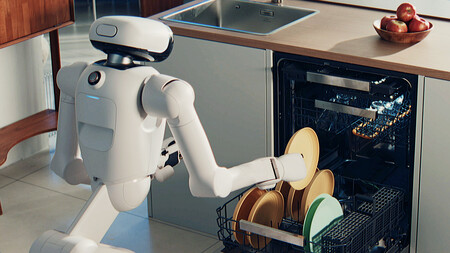
The top unit of CLOiD serves as a mobile smart home control center. Equipped with a chip acting as its brain, it includes a screen, speaker, cameras, various sensors, and voice-enabled generative artificial intelligence. These components enable the robot to communicate effectively using spoken language and “facial expressions” on its screen, eventually learning the living patterns of its users while controlling connected home appliances.
Integration with LG’s ThinQ and ThinQ ON ecosystem further enhances CLOiD’s functionality, allowing it to operate seamlessly with LG’s range of products, essentially serving as a fully interactive smart home hub.
Physical AI Technology: VLM and VLA
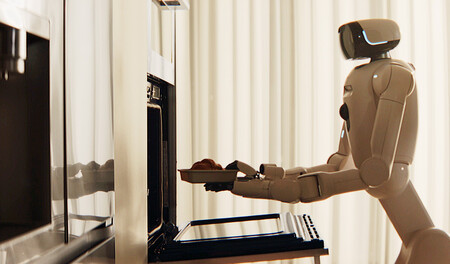
CLOiD utilizes a groundbreaking physical AI technology that combines two models: the Vision Language Model (VLM), which translates images and video into structured language-based understanding, and the Vision Language Action (VLA), which converts visual and verbal inputs into physical actions. According to LG, these models have been trained with tens of thousands of hours of data on household tasks, enabling CLOiD to recognize appliances, decipher user intent, and execute appropriate actions.
The robot’s wheeled base employs autonomous driving technology derived from LG’s experience with robot vacuums. This configuration provides stability, safety, and cost-effectiveness while maintaining a low center of gravity to minimize the risk of tipping over if it encounters a child or pet.
A Step Forward in Home Robotics

While CLOiD isn’t the only robot capable of folding clothes at CES this year—it faces competition from SwitchBot’s Onero H1—it appears that LG views CLOiD more as a concept than a product for immediate sale. The company plans to continue enhancing home robots with practical functions and designs suited for various household tasks, with an ultimate vision of achieving a “Zero Labor Home.” According to Steve Baek, LG’s home appliance solutions division president, the aim is to diminish housework so customers can focus on what truly matters in their lives.
As autonomous robots with generative artificial intelligence find a home at technology fairs, their potential to become commonplace in households hinges on consumer acceptance and affordability in the future.
Images | LG