
Polytechnic University of Peru: A New Dawn for Displaced Students
The Polytechnic University of Peru is set to enter the private university landscape in 2026, specifically targeting displaced students affected by the closure of non-licensed universities. This ambitious move aims to provide opportunities for those who faced academic hurdles due to institutional reforms led by SUNEDU.
Addressing the Gap Left by Non-Licensed Institutions
The reform by SUNEDU has left many students with incomplete education or devalued degrees, significantly impacting their ability to join the workforce. Oscar Becerra, the academic vice-rector, stated in an interview with Infobae Peru that the university’s approach stems from the need to address these challenges. Notably, some stakeholders are linked to previously sanctioned institutions like Peruvian Wings.
No Automatic Equivalence for Previous Studies
The Polytechnic University has outlined a clear policy: applicants from institutions sanctioned by SUNEDU will not gain automatic equivalence for their studies. Each case will undergo a detailed evaluation involving exams and interviews to ensure that incoming students meet the university’s standards aligned with today’s job market demands.
Incentives for Displaced Students
To facilitate the transition for students affected by university closures, the Polytechnic is considering offering partial scholarships, flexible payment plans, and academic support during initial study cycles. This strategy aims to help retain students who might otherwise fall through the cracks of the educational system.
Building Bridges into the Labor Market
Becerra emphasizes the importance of rebuilding a connection between these students and the labor market. He acknowledges that many professionals feel abandoned and unrecognized after the closure of their institutions. The Polytechnic aims to bridge this gap by aligning its educational offerings with genuine market needs.
Leveraging Existing Infrastructure
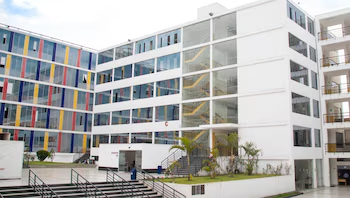
Operationally, the Polytechnic will utilize infrastructure from the now-defunct Alas Peruanas, reducing entry costs and expediting the launch of its programs. The presence of ALASPE, a cooperative with historical ties to the military sector, underscores the university’s commitment to effective resource management.
Focused Admission Policies
The university’s admission strategy includes providing special access for specific groups, particularly children of military personnel. This return to tradition aims to create stable enrollment and underscores the importance of such cooperatives in Peruvian higher education.
Innovative Teaching Approaches
The Polytechnic is actively seeking to integrate former professors from non-licensed institutions, provided they meet new pedagogical training standards focusing on digital tools and online education. This inclusive hiring strategy is designed to foster a robust educational environment.
Program Offerings and Enrollment Projections
The university plans to launch with 14 academic programs across business sciences, engineering, and health sciences. The curricular framework is designed for flexibility, adapting to market demands and employment trends.
Drawing inspiration from the Grancolombiano Polytechnic of Colombia, the Polytechnic of Peru aims for an enrollment model where approximately 80% of students engage in non-traditional learning formats. Initial enrollment is projected between 2,000 and 5,000 students in the first cycle, with long-term capacity potentially reaching 10,000 students.
The Challenge of Devalued Credentials
Becerra notes a staggering statistic: in the last five years, non-licensed universities in Peru have produced over 300,000 graduates, many of whom possess degrees that have lost significant value. This demographic represents a critical target audience for the Polytechnic as it seeks to redefine educational pathways and foster employability.