
Train Crash Near Machu Picchu: Security Concerns and Response Challenges
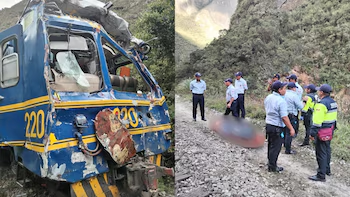
On a fateful day, two trains operated by PeruRail and Inca Rail collided at Pampacahua, located at kilometer 82 of the railway route connecting Ollantaytambo and Machu Picchu. This tragic incident resulted in the death of machinist Roberto Cárdenas and left at least 30 passengers injured, including tourists from various nationalities.
Immediate Aftermath and Emergency Response
Following the collision, affected passengers awaited assistance alongside the railway track as authorities dispatched ambulances and relief trains to transport them to nearby medical facilities. Despite these efforts, the response was hindered by obstacles created by private security personnel hired by the railway companies.
Paull Palma, the mayor of Ollantaytambo, voiced substantial concerns regarding this interference, asserting that the security forces impeded the municipality’s ability to offer immediate emergency aid. “The companies, instead of calling the authorities first, have dedicated themselves to calling private companies,” Palma noted, highlighting the urgency of an effective response during such critical moments.
Restrictions on Local Emergency Teams
The municipal Serenazgo team, which was at the scene ready to assist, faced significant barriers. According to Palma, their efforts were stymied by the railway company’s security, who reportedly sought to control the information flow and limit the visibility of the incident. “We went with the trucks, which each have their own stretchers, but they prevented us from passing,” he stated, emphasizing the frustrating situation faced by local responders attempting to deliver urgent care.
Though some initial assistance was provided, the mayor lamented that follow-up support was obstructed. “Unfortunately, I have the information from my head of Citizen Security, that at first, my serenazgo body has tried to support… But then they have prevented them,” he explained.
Response from Local Authorities and Ongoing Efforts
Despite the challenges at the scene, the District Municipality of Machupicchu announced that their Citizen Security personnel sprang into action from the moment the incident was reported, effectively participating in the evacuation of the injured. They expressed a commitment to collaborate with all involved entities, ensuring efficient and timely support for those affected.
In a statement shared via social media, they expressed their deep regret over the tragic accident, reinforcing their dedication to the safety and well-being of all impacted individuals.
Tourism Impact and Ongoing Investigations
As a direct consequence of the accident, rail transit to Machu Picchu was temporarily suspended, causing delays and disruptions to tourist services in the area. The causes of the train crash remain under investigation, with both PeruRail and Inca Rail indicating plans to release official statements regarding the incident and subsequent measures.
Carlos Gonzalez, president of the Cusco Chamber of Tourism, reported that emergency protocols were immediately activated, with the National and Regional Tourist Protection Network convening to ensure aid coordination and the safe transfer of affected visitors.
Conclusion
The train collision near Machu Picchu raises serious concerns about emergency response protocols and the role of private security in crisis situations. As investigations continue and local authorities seek to improve future responses, the safety and well-being of both residents and tourists in this historically rich region remain paramount in public discourse.