
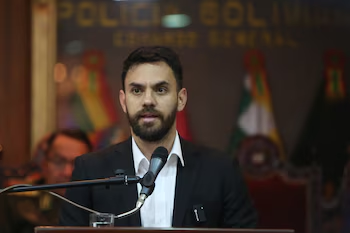
Arrest of Former Minister Eduardo Del Castillo
The recent arrest of Eduardo Del Castillo, the former Minister of Government (Interior) of Bolivia, has sparked considerable attention both nationally and internationally. Detained by police at Viru Viru airport in Santa Cruz while attempting to exit the country, Del Castillo’s situation is raising questions about the political climate and the implications of his detention.
Circumstances of the Arrest
According to reports, Del Castillo was apprehended after successfully passing through immigration controls on his way to Chile with his wife and daughters. The former minister was reportedly set to board a flight when law enforcement intervened. This incident raises significant concerns regarding travel freedoms for public officials in Bolivia, particularly those with a tumultuous political background.
Initial Detention and Claims of Political Motivation
After his arrest, Del Castillo was taken to the Special Force to Fight Crime (Felcc) in the municipality of Warnes. In a brief interaction with the press, he characterized his detention as stemming from “a political issue,” suggesting that his arrest could be linked to ongoing political tensions in Bolivia. This assertion highlights fears of political persecution that many public figures have faced in the country.
Once at the Felcc, Del Castillo maintained his stance, emphasizing the political underpinnings of his situation. At 6:00 PM, he was further transferred to the central anti-crime office in Santa Cruz de la Sierra, where he remains in custody as details about the case continue to unfold.
Broader Implications
The arrest of a high-profile figure like Del Castillo underscores the complexities facing Bolivian politics today. Accusations of political maneuvering and retaliation are common, particularly between parties with contrasting ideologies. Del Castillo, who served under the administration of Luis Arce, represents a segment of Bolivian politics caught in a web of controversy and conflict.
As news about Del Castillo’s situation develops, it remains to be seen how this will affect public perception, political stability, and the broader democratic processes in Bolivia. Advocates for human rights and political transparency may scrutinize the arrest closely, advocating for due process and impartiality.
Conclusion
The situation surrounding Eduardo Del Castillo’s arrest is poised to create further discourse regarding civil liberties, political freedoms, and the integrity of Bolivia’s legal system. The coming days will likely provide more insight into whether this incident is a reflection of systemic issues within the government or an isolated incident influenced by personal political agendas. As developments unfold, journalists, political analysts, and concerned citizens will be watching closely.
(News in development)