
Magnitude 6.0 Earthquake Hits Peru
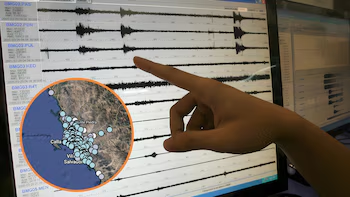
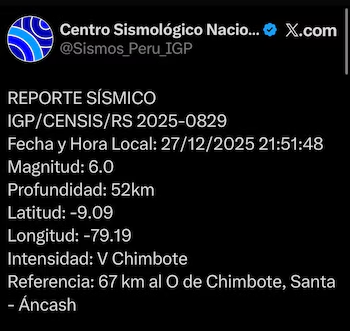
A magnitude 6.0 earthquake struck the central coast of Peru on Saturday, December 27, at 9:51 PM. The quake occurred at a depth of 52 km, allowing its tremors to be felt across various regions, although with moderate intensity. According to the Geophysical Institute of Peru (IGP), the epicenter was located 67 km west of Chimbote in the province of Santa, Áncash region, registering an intensity of level V at that site.
Impact on Local Population
This seismic activity was felt as far away as Lima, Trujillo, and Ica, causing considerable panic among residents who evacuated their homes due to the tremor’s extended duration. Fortunately, there have been no reports of severe damage or casualties, but local authorities emphasized the importance of maintaining composure and adhering to safety protocols during such events.
Preparedness and Safety Measures
In light of the quake, the Ministry of Health is actively monitoring health facilities in Chimbote and along the coast of Ancash to ensure readiness for any potential aftermath. Fortunately, the National Emergency Operations Center (COEN) from the National Institute of Civil Defense (Indeci) reported that there is no risk of a tsunami for the Peruvian coastline following this tremor.
When faced with shaking during an earthquake, it is essential to respond promptly. Residents are advised to:
- Drop to the ground and get on hands and knees to maintain balance.
- Cover your head and neck with arms or seek shelter under a sturdy piece of furniture.
- Stay indoors unless it is unsafe, as many injuries occur when people try to exit during shaking.
If outdoors, find an open space away from buildings and trees to wait out the shaking. If in a vehicle, stop in a safe spot away from potential hazards.

The Seismic Context of Peru
Peru experiences numerous earthquakes because it lies within the Pacific Ring of Fire, one of the most seismically active regions in the world. The interaction of the Nazca plate descending beneath the South American plate generates significant tension and energy that results in frequent seismic activity.
This tectonic activity explains the daily occurrence of tremors across the region, which can vary in intensity and origin. Historical records show that significant quakes, such as the devastating earthquakes of 1687 and 1784, have had lasting impacts on both geological formations and public consciousness in Peru.
Peru’s geological dynamics continue to influence its susceptibility to seismic events, making awareness and preparation crucial for local communities. Emergency services, alongside government agencies, remain vigilant in monitoring conditions and providing safety guidance for residents, especially following significant seismic events like this recent earthquake.