
The Controversial 2026 Budget and Its Implications for Argentina
Key Legislative Session Ahead
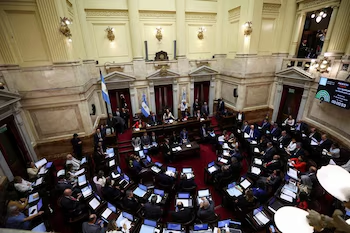
The Argentine Senate is preparing for a crucial session centered around two significant legislative initiatives: the 2026 Budget and the Tax Innocence Law. These proposals are essential for the current libertarian government, led by President Javier Milei, as they attempt to demonstrate political control and the capability to manage the country’s finances. However, this legislative effort is marked by tension, particularly related to Article 30 of the budget proposal, which eliminates minimum financing levels for education, science, and defense.
Controversy Over Article 30
Article 30 has spurred significant backlash from various provinces, as it jeopardizes essential funding for education and public services. Critics argue that such cuts could have detrimental effects on the quality of education and public welfare. Furthermore, the budget stipulates new requirements for universities, mandating detailed financial reporting with the threat of halting transfers if compliance is not met. These provisions have alarmed many stakeholders within the academic and scientific communities.
Opposition’s Stance
José Mayans, president of the Peronist bloc in the Senate, has publicly rejected the budget initiative, calling it a project reflective of a “de facto government.” He argues that it should be sent back to the chamber of origin for multiple reasons, including its adverse implications on education funding and public investment. Mayans expressed concerns about the lack of transparency regarding the government’s management of public finances, pointing to the absence of Finance Minister Luis Caputo in parliamentary discussions.
“This express treatment damages the country, and should return to deputies for several issues,” stated Mayans, highlighting his constituents’ worries about decreased funding and inadequate governmental oversight.
Economic Forecasts and Market Responses
Despite the pushback, the government forecasts a 5% economic growth for 2026, with an annual inflation rate of 10.1% and an expected dollar value of approximately $1,423 by December. Approval of the budget would represent a significant legislative victory for Milei, providing kindling for investor confidence and assisting with January’s debt maturities.
Seeking Legislative Approval
The pressure is on the Senate to grant half approval of the 2026 Budget, marking a significant step for President Milei as it would be his first formal legislative accomplishment. The administration aims to close the year on a high note by implementing this budget and the Tax Innocence Law, showcasing its authority to govern in a challenging economic landscape.
The upcoming session is critical, not only for the government’s immediate legislative agenda but also for establishing its political legitimacy in the eyes of both the market and the electorate. The outcome will significantly impact public funds, education systems, and overall governmental control.
Conclusion
As the Argentine Senate prepares to debate the 2026 Budget and the Tax Innocence Law, the stakes are high. With significant opposition and multiple controversial provisions, the future of these legislative initiatives remains uncertain. The next few days will be pivotal in determining not only the government’s fiscal strategy but also the broader implications for Argentina’s socio-political landscape.