
The Importance of the Right Vagus Nerve for Heart Health
Maintaining cardiac youth could hinge on a less commonly explored aspect: the preservation and possible restoration of the connection with the right vagus nerve. This critical nerve plays a pivotal role in ensuring the heart’s longevity and adaptability.
Recent Research Insights
A groundbreaking study conducted by researchers from the Sant’Anna School of Advanced Studies in Pisa, Italy, highlights the significance of this innervation. Their findings suggest that preserving this connection is crucial for slowing cardiac aging and safeguarding heart function after thoracic surgeries or transplants.
Published in Science Translational Medicine, the research bridges experimental medicine with cardiovascular bioengineering, offering new clinical options for heart failure patients.
Mechanisms of Cardiac Aging
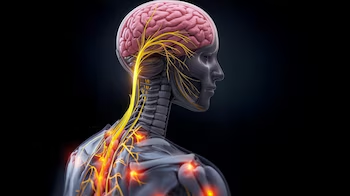
The right vagus nerve is critical to the autonomic nervous system and plays an essential role in heart function. Cardiologist and longevity expert Eric Topol noted that preserving this nerve’s integrity helps maintain youthful organ function. Loss of vagal connectivity accelerates cardiac aging, diminishing the heart’s ability to adapt after surgery.
Vincenzo Lionetti, the lead researcher, stated, “When the integrity of the connection to the vagus nerve is lost, the heart ages more quickly.”

The Future of Cardiac Health
Given the limited strategies available for repairing vagal innervation post-surgery, researchers utilized a mini-pig model, noting its cardiovascular similarities to humans. A biodegradable nerve conduit made of chitosan and poly-ε-caprolactone was implanted to restore the right vagus nerve after surgical sectioning.
Even partial recovery of innervation showed significant benefits: the treated subjects exhibited enhanced cardiac performance, reduced diastolic desynchrony, and lower indicators of aging and oxidative stress. According to Anar Dushpanova, a cardiologist on the team, “Even partial restoration of the connection between the right vagus nerve and the heart is sufficient to counteract remodeling mechanisms and preserve effective cardiac contractility.”

A Paradigm Shift in Cardiac Care
One notable outcome of this research is the development of an implantable and bioabsorbable neuroprosthesis by the Biorobotics Institute, aimed at promoting natural nerve regeneration at the cardiac level. This technology represents a promising bridge between accidental nerve damage and functional recovery, potentially allowing for less invasive surgical interventions with significant clinical benefits.
This research underscores a major shift in how post-surgical cardiac complications could be approached. Instead of merely treating heart failure or accelerated aging due to nerve loss, the focus can be on restoring the right vagus nerve as a proactive measure from the outset of surgical procedures.
Restoring cardiac innervation using bioabsorbable technology may redefine modern cardiology, allowing for preemptive damage control and long-term heart protection. This hitherto underappreciated connection between the vagus nerve and cardiac health could indeed unlock the key to a more vibrant, healthier life post-surgery.