
For years, we have repeated that Christmas is an invention. Not only does the Bible not specify that Jesus was born on December 25, but it is also implausible that it was on that date. The Gospels detail that shepherds were tending flocks outdoors, which would have been unlikely in Bethlehem during the winter months. Moreover, the notion that the Romans would conduct a census at such a time seems almost ridiculous.
This leads many to conclude that the most reasonable explanation is that during the 4th century, the Church established December 25 as the birth of Christ to coincide with pagan festivities such as Sol Invictus and Saturnalia.
However, recent evidence points to an obscure third-century antipope whose obsession with scriptural chronology led him to declare the 25th of December as Christ’s birth independently. This is the story of how Hippolytus of Rome invented Christmas.
The Myth of the Christianization of Roman Festivals
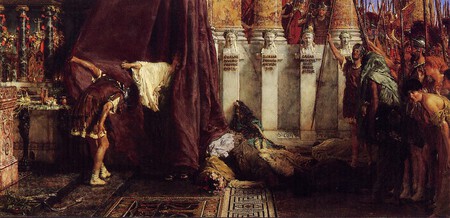
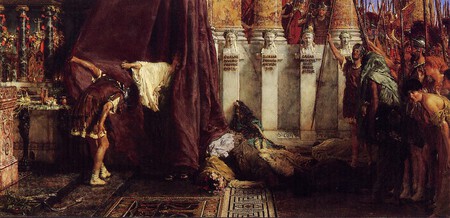
Hail, Caesar! Io, Saturnalia! by Lawrence Alma-Tadema
The widely accepted theory suggests that the Church chose December 25 deliberately to align with the existing celebration of the “Unconquered Sun” during the winter solstice. However, this theory doesn’t fully answer a critical question: Why December 25?
As Thomas C. Schmidt, a Princeton researcher, points out, the Roman Saturnalia festivities were not observed specifically on the 25th. Historical evidence suggests that the peak of Saturnalia occurred closer to the 17th, raising questions about the Church’s reasoning for selecting the 25th.
The First Historical References to Christmas
The earliest known reference to December 25 as the “birth of Christ in Bethlehem” appears in the Filocalius Calendar, dated to 336 AD. This gives us a timeframe for when the festival might have gained traction, suggesting a more established context even before the 4th century.
Who Was Hippolytus of Rome?
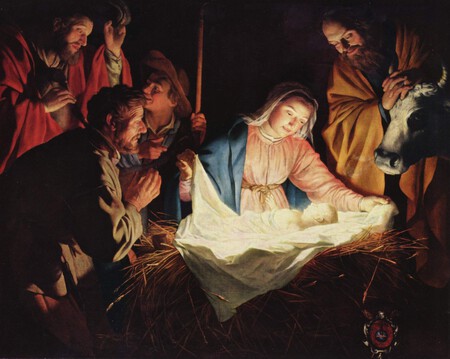
Adoration of the Shepherds, by Gerard van Honthorst
Hippolytus of Rome was a pivotal figure, known as a theologian and preacher, and the first antipope in history. In 220 AD, he declared in his commentary on Daniel that “the first coming of our Lord, in Bethlehem, was on Wednesday, December 25.” However, not all texts support this date, with variations suggesting alternate months.
Notably, inscriptions on a statue of Hippolytus, dated 222 AD and discovered near the Via Tiburtina, contain a lunar table with crucial dates, including March 25 as the original Good Friday. Hippolytus later argued that the “genesis” of the Lord occurred on March 25, which he believed was the date of creation itself.
The Genesis of Christmas: Birth or Conception?
The chronological connection raises a question about ‘genesis’: Does it refer to birth or conception? Exegesis from Hippolytus onward suggests it points to conception, aligning with the festival of the Annunciation celebrated on March 25.
In summary, the selection of December 25 as Christmas Day is rooted in a complex interplay of scriptural interpretation, chronological calculations, and perhaps a desire to establish a Christian holiday amid existing pagan festivities.