
Rome’s North African Oil Renaissance: The Mega-Oil Mills of Henchir el Begar
The Roman Empire, renowned for establishing the foundations of Western civilization, made significant strides in infrastructure and industry. Notably, a recent archaeological discovery in North Africa sheds light on a remarkable facet of Roman industry—its extensive oil production.
Discovering the Mega-Oil Mills
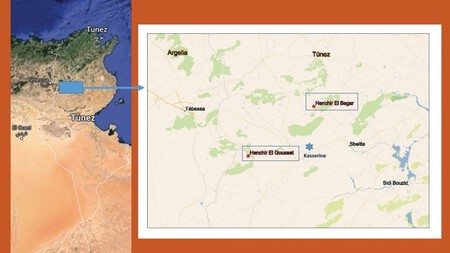
In the Kasserine region of Tunisia lies the archaeological site known as Henchir el Begar. Researchers have uncovered what they believe to be the second largest oil pressing complex in the entirety of the Roman Empire. Located near the ancient Roman city of Cillium, this site consists of two major settlements believed to be integral to the olive oil production industry.
These mills were likely operational from the 3rd to the 6th centuries AD, highlighting their significance within the Roman economy. The findings emphasize the ambition of the region as a productive powerhouse.
Significant Findings at Henchir el Begar
Archaeologists have identified two primary sectors within the Henchir el Begar complex:
Hr Begar 1: This facility houses twelve beam presses, making it the largest oil mill in Tunisia and the second largest in the Roman world. Built with heavy beams and counterweights, these presses were capable of exerting tons of pressure. The mill also includes cisterns and a water collection basin.
Hr Begar 2: This sector contains another eight presses, along with a separate water collection basin. The scale of these operations is indicative of a thriving industry.
Additionally, georadar technology has revealed a complex network of oil settling tanks, warehouses, and worker housing, demonstrating the logistical sophistication of the site. Furthermore, there were routes that accommodated the transport of amphorae—clay vessels used for storing oil—connecting the mills to coastal distribution points.
A Mix of Production
Beyond oil, excavations indicate that stone mills were also used for cereal production, further emphasizing the region’s strategic importance. The combination of olive oil and grain production suggests a stable and thriving agricultural economy.
Strategic Importance of the Region
The Kasserine area, characterized by high steppes and continental climate, provided ideal conditions for olive tree cultivation. Archaeologists assert that this region acted as a cultural exchange hub, allowing various societies to interact and trade. As a result, the Proconsular province of Africa emerged as a crucial supplier of high-quality oil, used not only for culinary purposes but also for lighting and making medical ointments and cosmetics.
Future Perspectives and Ongoing Research
The Henchir el Begar discovery is not the only finding from this archaeological mission. Artifacts such as copper or brass bracelets and stone projectiles have been uncovered, along with architectural elements repurposed in Byzantine walls.
The project commenced in 2023, co-led by the Ca’ Foscari University of Venice, the University of La Manouba in Tunisia, and the Complutense University of Madrid. Project coordinator Professor Luigi Sperti emphasizes that this mission provides an unprecedented view of the agrarian and socioeconomic structures in ancient Roman Africa.
As explorations continue, there is a promising outlook for understanding the broader implications of oil production and trade in the Roman Empire, particularly in North Africa. This monumental find not only enriches our historical knowledge but also highlights the intricate connections between agriculture, industry, and commerce in ancient civilization.