
China has taken a remarkable lead in the realm of space sovereignty. While discussions about space often conjure images of NASA and the United States, the dynamics have shifted significantly in recent years. The space race is not solely a government affair anymore; it now involves a myriad of private companies, including SpaceX, Blue Origin, and Europe’s own PLD Space. Countries like China and India are strategically working to expand their influence beyond Earth’s atmosphere.
Earlier this month, China executed four space missions within just a few days, marking a significant achievement that challenges the dominance of the United States.
The Accelerated Pace of Launches
In 2025, China reached a pivotal milestone in its aerospace industry by surpassing its previous launch record with over 80 orbital missions. This included an impressive feat where three Long March rockets launched in less than 19 hours—an achievement only replicable by SpaceX at such pace.
Conducting a Stress Test
In early December, the Chinese space agency carried out a comprehensive stress test on its launch system. Between December 5 and 9, four different launch sites were employed to assess the capabilities of China’s launch, logistics, and telemetry centers. This test aimed to determine how well these facilities could work in tandem without causing interference—essential for both ongoing satellite deployments and rapid crisis response.
Payload Details
During this operation, the following missions were executed from four designated ports: Hainan, Taiyuan, Xichang, and Jiuquan:
- Mission 1: A Kuaizhou-1A rapid-deploy rocket from Jiuquan, launching VDES satellites for maritime traffic monitoring.
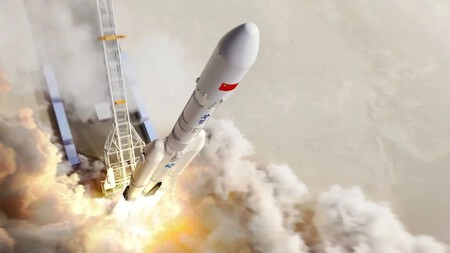
- Mission 2: A Long March 8A rocket from Hainan, carrying 14 Guowang satellites—China’s answer to Starlink and designed to compete with SpaceX’s Falcon 9.
- Mission 3: A Long March 6A rocket from Taiyuan, though its confirmed payload remains unclear.
- Mission 4: A Long March 4B, which launched a military reconnaissance satellite, Yaogan-47, crucial for agricultural monitoring.
CAS Space
Fears of Starlink
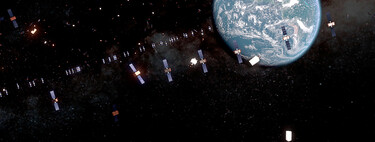
China’s ambitious aim is to establish its own satellite constellation similar to Starlink, which requires launching thousands of satellites over time. This recent four-day launch campaign demonstrates the capacity of the Chinese space agency to conduct numerous missions efficiently without sacrificing reliability.
China aims to deploy thousands of Guowang satellites and ensures it occupies available orbital positions before they are claimed by others. Currently, Starlink has over 6,000 operational satellites with an additional 42,000 planned. In contrast, China has ambitious plans for approximately 25,000 satellites, emphasizing the critical nature of “first come, first served” in space allocation.
The International Telecommunications Union governs the assignment of orbit and frequency, further motivating China not to lag behind Western nations, particularly the United States.
The Implications of Space Sovereignty
The competition for space sovereignty has become increasingly evident. Notably, Starlink has shown its utility in wartime scenarios, such as providing communications during conflicts. Moreover, China’s Tiangong space station had to navigate to avoid collision with Starlink satellites, evidencing the strategic implications of these technologies.
This emerging battle for space dominance reflects an underlying concern among nations—control over space technology and resources. The U.S. has historically dominated this arena, but China has made significant strides in recent years while the European Union explores its own pathways, echoing a collective aim to minimize reliance on external technologies.
China’s stress test for its launch capabilities serves as both a showcase of technological prowess and a direct challenge to its rivals in the quest for control in the cosmic frontier.
Image | CAS Space, Galactic Energy